Following months of U.S. and Israeli attacks against Iran and repeated diplomatic efforts and ceasefires, the U.S. administration has shifted to a strategy of increased economic pressure against Iran under Operation Economic Outcast. The White House has framed the current strategic shift as primarily an economic campaign (with a dual economic and military approach to pressure Iran). The current offensive, however, is a military campaign with a strong economic component: in effect, a global siege or war of attrition against Tehran designed to break the regime.
The administration is also backing away from its diplomatic agenda. Following the failed implementation of the Memorandum of Understanding, Washington is no longer exercising military and economic pressure to coax the regime to the table; instead, the White House is strategizing to bring the regime either to collapse or a structural change. In the words of Treasury Secretary Scott Bessent, Tehran “will not survive in situ, as they are now.” Iran, for its part, is showing no signs of moderating or shifting to the pro-diplomacy camp to make even limited concessions.
Military Operations and Economic Warfare
The U.S. administration’s current strategy of economic warfare relies on a combination of military and economic pressure. Although sanctions typically are not enough to win a conflict outright, the Trump administration believes that the military blockade of Kharg Island, which accounts for about half of the Iranian government’s revenue, combined with sanctions, can deplete the already weakened regime in Tehran.
The blockade is designed to apply economic pressure, but is also a part of an extensive and recently extended military operation that involves a fleet of over twenty U.S. warships, including two carrier strike groups, an amphibious ready group, 13 guided-missile destroyers, cruisers, littoral combat ships, 120 advanced combat and support aircraft, and approximately 50,000 troops in the region. Sanctions, which are being pursued aggressively by the Departments of Treasury and State, target other industries and sources of revenue while truncating methods by which the regime attempts to circumvent economic pressure.
Washington’s strategy has also intensified its contest with Iran for relative control over the Strait of Hormuz. The administration’s use of economic warfare, or attrition, will likely involve a longer time frame, and relative control of the strait is now even more essential because it determines the flows of global oil and prices during the extended period of economic pressure. Project Freedom, headquartered at MacDill Air Force Base in Tampa, Florida, has been working to facilitate oil shipments through a combination of military escorts and coordination between partner countries, insurance companies, and shipping organizations, and CENTCOM mine-clearing operations.
In addition, CENTCOM has recently advanced its offensive posture under Operation Epic Fury. First, U.S. forces have been using precision strikes against Iranian coastal defense systems, missile sites, and radar installations near the Strait of Hormuz. Targeting Iranian radar is not new. In March, for example, the Pentagon deployed A-10 Thunderbolt II aircraft and AH-64 Apache helicopters specifically for their ability to engage in low-altitude, precision attacks against land-based threats in Iran’s southern littoral and use advanced sensors to track and eliminate mobile targets on the shore. However, in September, CENTCOM began elevating its strategy of striking assets used to sense ships to keep Iran’s sensor network permanently degraded and effectively blind the Islamic Revolutionary Guard Corps (IRGC).
Earlier this month, the U.S. struck Iranian air defense sites, radar systems, communication sites, maritime assets, and mine-laying capabilities, with explosions reported across the southern provinces of Hormozgan (Larak Island), Sistan-Baluchestan, Kerman, and Khuzestan. Although Iran will try to rebuild, the IRGC’s recent alternative use of small fast attack craft (FAC) to detect vessels going through the strait suggests CENTCOM’s targeting of radar has had an impact.
Second, the administration has moved from interdicting Iranian vessels to destroying them under its “tanker for tanker” retaliatory policy, and permanently disabled or sunk 10 Iranian vessels in the first week of September. According to CENTCOM Commander Admiral Brad Cooper, the policy is designed to, “impose an even higher economic cost” on Tehran for attacks on the strait, and to deplete Tehran’s shadow fleet that is used to finance the IRGC and its regional proxy militias.
Iran’s Counterstrategy and the Risk of Protraction
Recent U.S. intelligence reports and statements from the regime suggest that, despite U.S. attacks and the blockade, Tehran has grown more confident in its ability to attack targets in the Middle East and raise global oil prices. As such, the Iranian regime believes that the United States will not be able to sustain a protracted conflict and that domestic pressure will eventually either force a withdrawal, similar to U.S. experiences in Vietnam, Iraq, and Afghanistan, or end in a negotiated off-ramp from the conflict that is highly beneficial to Iran. The regime’s resulting “survival strategy” exploits the risk of protraction by fostering endurance at home to outlast the siege, while increasing the costs of the conflict for the U.S. and its allies.
To raise the costs of the war, the regime is continuing to threaten shipping in the strait to maintain its claim over the waterway and inflate oil prices globally. While Teran retains the ability to attack vessels, there are also signs that indicate that the IRGC may be encountering operational constraints on its mine-laying capabilities and targeting cycles, limiting its ability to control shipping through the strait as much as it would like. As such, CENTCOM reports having moved more than one billion barrels of crude oil through the strait in the last couple of months and has maintained oil prices under $100 a barrel since May, well below the regime’s goal of $200.
Tehran also uses missile and drone attacks on U.S. bases and regional allies to undermine support for the conflict and to punish cooperation with the U.S. on sanctions. Because there is uncertainty over how many missiles and drones the IRGC possesses, it is difficult to estimate with precision the scale of the threat. The IRGC is also using different missile varieties, trajectories, maneuvers, and warheads, such as warheads that separate into more numerous projectiles as they close in on their target, to try to overwhelm U.S. and allied defenses. Some military analysts also anticipate that Iran might escalate the conflict prior to the midterm elections to drive up oil prices or otherwise impact the outcome, believing that if President Trump’s party loses the election than he will lose support for the war.
In addition to rebuilding its capabilities and using existing stocks of missiles and drones to target ships, the IRGC may continue to innovate new capabilities to obstruct shipping. Iran’s recent attempt to deploy Fajr-5 Multiple Launch Rocket Systems equipped with mines is one example. Although Multiple Launch Rocket Systems that deploy floating mines from parachutes are less powerful than those planted by ships, they demonstrate a high level of innovation. The IRGC has also considered plans to sabotage undersea communications cables (although there is uncertainty if Iran has the necessary capabilities).
Iranian proxies can also be used to raise the costs of the conflict by opening new fronts. Iran is almost certainly working with these groups to obstruct oil flows in order to negatively impact oil prices and global markets and thereby generate pressure to end the conflict. Recently, drones fired from Iraq shut down a crucial pipeline that allowed Saudi Arabia to continue exporting crude oil after the closure of the Strait of Hormuz, and Houthi militia have further targeted Saudi vessels and launched dozens of ballistic missiles and drones at Saudi oil facilities.
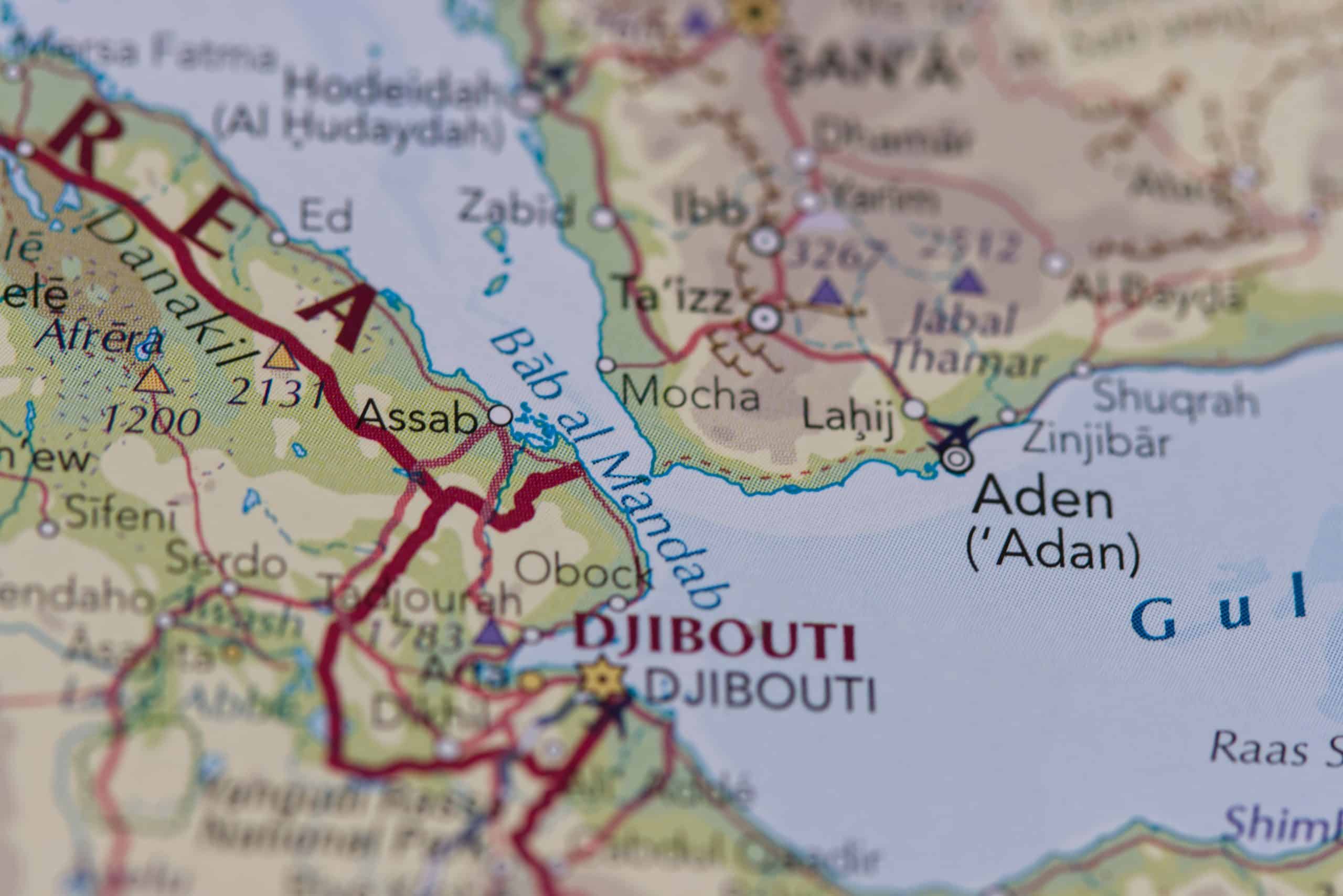
The Houthi movement has also taken control of Yemen’s entire western Red Sea coast and Perim Island. Houthi authorities have communicated to Washington that they will not attack international, non-Saudi vessels if the U.S. refrains from supporting Saudi Arabia and confronting the rebels; however, their control of these strategic locations enables a heightened ability to threaten international shipping through the Bab al-Mandeb Strait that greatly benefits both Iran and the Houthi Movement. Based on IRGC-affiliated media, Tehran believes that the current combination of Iranian influence of the Strait of Hormuz and the Houthis territorial gains on the Red Sea coast is intensifying economic pressure on the United States and its allies and bolstering Iran’s bargaining power.
At home, Tehran is preparing to outlast the administration’s strategy of economic warfare by building a “survival economy,” which involves rationing, government subsidies, and attempts to bypass sanctions and facilitate support through outside states, such as Russia and China. Tehran is also reinforcing its forces used to counter mass mobilization. In September, the IRGC, Basij, and Law Enforcement Command conducted a large-scale internal security exercise, known as the “Janfada,” involving 313,000 personnel in Tehran Province to demonstrate its capacity for mass mobilization and project strength to suppress potential unrest. Basij Organization Commander Hossein Taeb has also expressed an interest in expanding the Basij, which is used by the IRGC for domestic control and protest suppression, from about 300,000 to one million reservists nationwide.
The regime also recently held pro-government rallies in Tehran on the anniversary of the 2022 death of a young woman in police custody, which resulted in nationwide protests. The demonstration, which, according to Iranian media had hundreds of thousands of participants, was likely organized as a warning to the regime’s opponents in Iran and a signal to Washington that economic isolation and internal turmoil will not undermine the regime’s domestic control.
U.S. Military Options
While it is possible that the current economic pressure campaign through the blockade and sanctions may successfully undermine the regime in Tehran, there is no way of knowing if the current economic pressure is enough to destabilize the Iranian government or how long that might take. Additionally, the Iranian regime can tolerate high levels of public suffering in the interest of its own survival. As such, if the blockade and sanctions are not enough to break the regime (or if Iran escalates the conflict), it may become necessary down the road for U.S. planners to increase strikes on Iran to further elevate the level of pressure.
One option under consideration is to physically isolate Iran from outside support. Reports show that Russia transported drone parts, ammunition, and TNT to Iran through the Caspian Sea, which could offer an economic lifeline to Iran (although Moscow might be too occupied with its war against Ukraine to support Tehran significantly).
China also supports Iran through the supply of critical components for ballistic missiles, such as sensors, voltage converters, semiconductors, and ammonium perchlorate (a key oxidizer for solid-fuel missiles), and is actively helping Iran circumvent U.S. sanctions. As a result, the U.S. Department of Defense has considered the use of strikes on infrastructure to isolate Tehran from external support from Russia and China.
CENTCOM planning options include the destruction of transportation infrastructure to cut trade routes from Russia and China, which could be carried out by the U.S. or Israel. Targets could include Caspian Sea ports, such as Bandar-e Anzali and Amirabad, which are critical nodes for covert routes used by Russia known as the “Caspian Express.” The Pentagon could also target Iranian land and rail networks that connect Iran to the outside world through Azerbaijan, Turkmenistan, and Pakistan (via the International North-South Transport Corridor), which has been used to bypass CENTCOM’s naval blockade in the Persian Gulf.
Back in May, Israel conducted airstrikes on Caspian Sea ports specifically to disrupt external flows, demonstrating the feasibility of such operations, and in July, CENTCOM struck the Aq Taqeh Khan railway bridge on the Gorgan–Incheh Borun line (Iran’s rail link to Turkmenistan, Kazakhstan, and China) with cruise missiles. However, there are concerns that striking rail networks more extensively could cause friction with China, Russia, and Pakistan, and that striking infrastructure in the Caspian Sea region comes with the risk of hitting Russian or Azerbaijani assets.
Second, the administration could return to increased strikes on Iranian military targets potentially using tactics presented in late July under CENTCOM Commander Admiral Brad Cooper’s “go big” strategy. The plan recommended targeting sites that manufacture rocket propellants, missile bodies, and electronic components to degrade Iran’s missile, drone, and naval production facilities, including shipyards, and prevent future rebuilding. Military targets have in the past, and may in the future, include the destruction of underground command bunkers and headquarters used by the IRGC to eliminate remaining command nodes.
There is also consideration of targeting senior Iranian military and political leaders in renewed decapitation strikes designed to create a leadership vacuum. The Department of Defense could also again target nuclear sites, as recent satellite imagery indicates that Iran is moving forward with the reconstruction of the Taleghan 2 facility, which is located at the Parchin military complex.
A third approach, sometimes referred to as coercive attrition, would seek to intensify economic strife and thereby accelerate regime failure or capitulation. Targets identified by CENTCOM include civilian and dual-use infrastructure such as power plants, transportation networks, and oil and gas facilities. Some outside analysts also argue that Iranian banks could be viable targets, noting the strike in March by Israel and/or the U.S. that destroyed the data processing facilities of Iran’s Bank Sepah, crippling its operations.
Conclusion
Approximately 2,500 years ago, Chinese military strategist Sun Tzu warned, “The rule is, not to besiege walled cities if it can possibly be avoided,” because it could lead to a costly and protracted conflict that exhausts resources and moral, and may result in vulnerabilities that other adversaries can exploit. While a siege of that time differed from the current operation against Iran, the risks associated with protracted warfare remain.
The conflict with Iran, just over six months in, has already reduced U.S. stocks of interceptors and moved military assets from the Indo-Pacific and other theaters of operations to the Middle East. According to a recent Congressional Budget Office (CBO) report, the conflict has cost the United States $38 billion as of August 1. The report further cited concerns that the Pentagon has “probably used between one-half and two-thirds of its inventory of those munitions [missile defense interceptors] since June 2025,” creating a shortfall that “would become especially problematic if a conflict arose with an opponent whose arsenal included large numbers of ballistic and cruise missiles” such as the People’s Republic of China.
Unlike Sun Tzu’s time, modern democracies are also constrained by domestic support, which is currently low, with over 50% opposition to the war at home, and approaching elections in Israel and the United States in October and November, respectively. These and other factors, such as a possible military escalation by Iran, suggest that it will likely become necessary at some point to expand kinetic operations strategically in coordination with Operation Economic Outcast to avoid a protracted conflict.