As of mid-September, the Houthis, after capturing Mokha, the Hanish Islands, and Mayun, hold physical control over the approaches to Bab el-Mandeb, the chokepoint through which a large share of Red Sea shipping must pass. Saudi Arabia has begun mobilizing a direct military response to reverse those gains, but even a partial rollback would not undo the structural conflicts described below. For Washington, still absorbing the costs of its war with Iran, this is not a peripheral development. It opens a second maritime front that compounds the pressure already building in the Strait of Hormuz.
From harassment to territorial control
Since late 2023, the Houthis have disrupted Red Sea shipping through missile and drone strikes, a campaign that has forced carriers toward the Cape of Good Hope and periodically eased when Western naval deployments or diplomatic understandings have taken hold. What is unfolding now is qualitatively different. The group is no longer merely threatening vessels from the coast; it is occupying islands and coastal positions that increase its leverage over the approaches to Bab el-Mandeb. Control in this context does not mean the ability to administer the strait or physically seal it at will. What matters is the potential to make transit persistently unsafe and, during periods of escalation, commercially unviable. In a maritime chokepoint, effective denial does not require permanent closure. If the threat level is sufficient to push carriers and insurers away from the route, the strategic effect can be much the same.
The Houthi advance also exposes the limits of Saudi influence inside Yemen. The Emirati drawdown from direct involvement along the southern Yemen coast followed Saudi Arabia’s strikes on UAE-backed STC forces in Mukalla in late December and the subsequent ultimatum. The Emirati withdrawal weakened the political, military, and local networks that had previously helped contain Houthi expansion. Riyadh has struggled to replace those networks and capabilities, while Saudi-backed Yemeni government forces have proved unable to fill the resulting vacuum or prevent further Houthi consolidation.
The Houthi gains therefore reflect not only the movement’s military strength, but also the erosion of the coalition that once constrained it. The United Nations estimates that more than 80,000 people have been displaced by the fighting since the start of September alone. A movement that spent a decade as an irritant to maritime traffic is now converting territorial gains into a more durable form of maritime leverage. The result is a more permissive environment in which the group can translate control of strategic territory into coercive power over shipping, on top of a stronger military position. The shift changes the economics of coercion: periodic harassment can be absorbed, rerouted around, or insured against. A credible capacity to make a chokepoint unsafe is harder to manage. It allows the Houthis to raise transit costs, shape commercial risk calculations, and escalate on their own schedule rather than respond to Western naval posture.
A second chokepoint for Iran’s leverage
Iran does not need to direct every Houthi operation to benefit strategically from the group’s advance. The important point is strategic convergence, independent of operational control. A Houthi-held position capable of threatening Bab el-Mandeb creates an additional source of pressure on the United States and its Gulf partners at the same time that the Strait of Hormuz remains contested. Attacks on shipping and Gulf energy infrastructure near Hormuz have already driven up insurance and freight costs and tested the credibility of American security guarantees to regional partners. Greater Houthi leverage in the Red Sea adds a second pressure point without requiring Tehran to expose itself directly. Whether individual Houthi actions are ordered, encouraged, or undertaken autonomously matters less to the strategic effect. These factors widen the crisis’s geography and increase the number of fronts Washington and its partners must manage simultaneously. For Tehran, this is the principal advantage. Pressure no longer needs to be concentrated around Hormuz. Instability at Bab el-Mandeb can reinforce it, narrowing alternative routes, increasing commercial uncertainty, and raising the broader cost of sustaining pressure on Iran. The Houthis therefore give Iran strategic leverage even where Iranian operational control is limited or absent.
Energy security implications and regional realignment
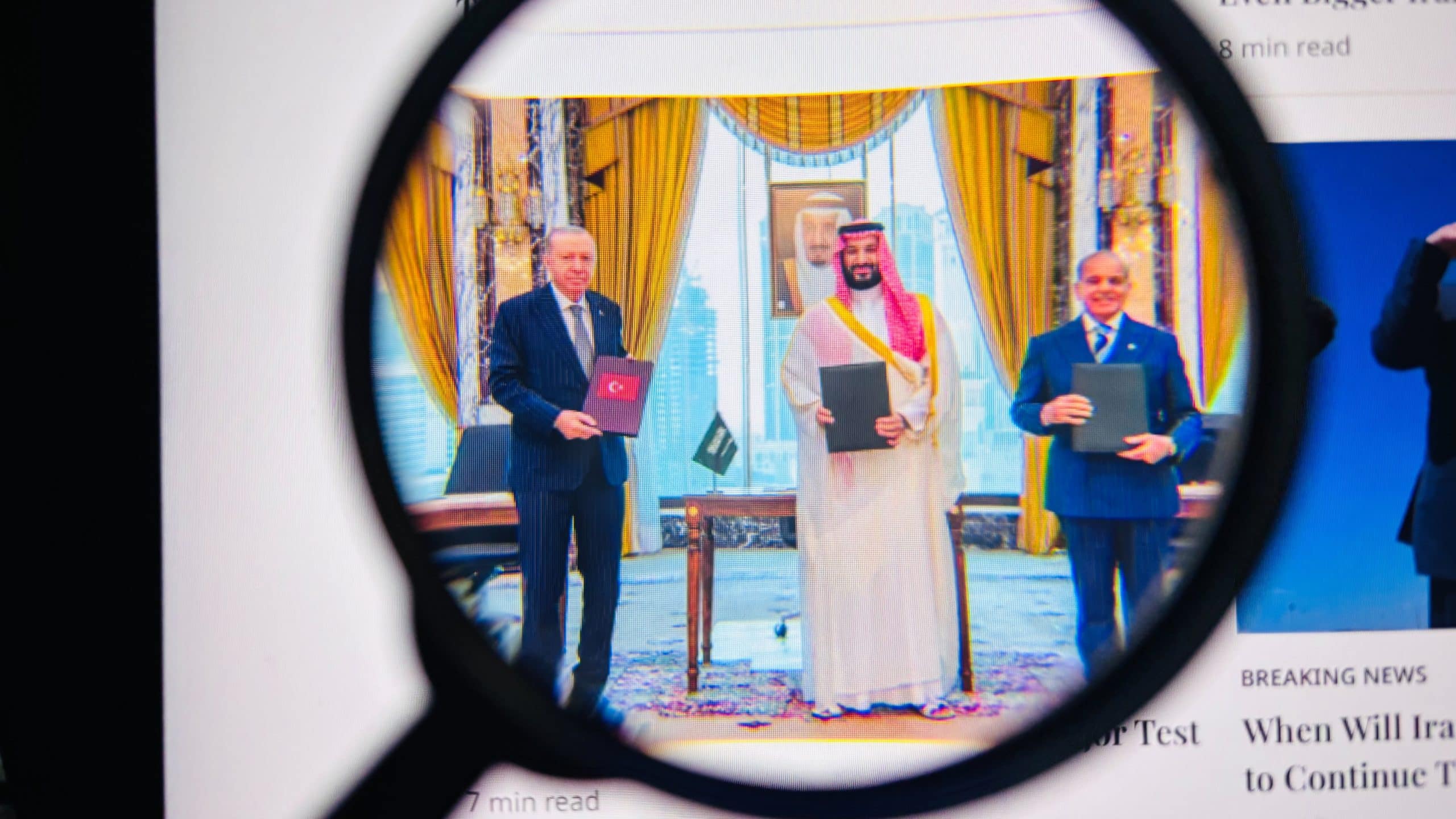
Saudi Arabia shifted a larger share of its crude exports toward the Red Sea route earlier this year, partly to reduce exposure to the Strait of Hormuz. The Houthi strikes on two Saudi tankers in July, followed by the capture of the Hanish islands, undercut that hedge directly. Carriers that cautiously resumed Suez transits earlier in the year, after a brief window of reduced attacks, now face the choice between the longer, costlier Cape route and the risk calculus of transiting a strait where Houthi control remains contested. The practical effect is to narrow the options available to exporters and insurers at precisely the moment global energy markets are already pricing in Hormuz-related risk. Two chokepoints under simultaneous pressure present a different order of problem than one, which leaves less room for markets, or for Washington, to treat either crisis in isolation. That fracture is not incidental: Riyadh’s own strikes on Emirati-backed forces and the forced withdrawal that followed opened the vacuum the Houthis exploited. The coalition’s fracture opens three possible corrective paths, of unequal likelihood. A plausible scenario is an attempted Saudi-Emirati rapprochement, though only partial. Their rivalry has imposed costs on both sides. A shared stake in containing Houthi expansion gives Riyadh and Abu Dhabi reason to re-coordinate on the broader Red Sea arena. The two remain on opposing sides in Sudan, where their rivalry shows no comparable sign of easing, leaving any thaw uncertain across theaters. However, Emirati support against the Houthis could still become a bargaining chip for concessions on Sudan, making any thaw as much transactional as strategic. Less likely is a tighter convergence between Saudi Arabia and Israel around shared exposure to Iran-aligned pressure on maritime chokepoints. Least likely in the near term is a first substantive activation of the Mecca Joint Defense Agreement with Turkey and Pakistan. The pact’s credibility is already in question after its signatories stayed on the sidelines during earlier Houthi strikes on Saudi tankers, and a Red Sea crisis is unlikely to change that.
Policy options
The US should resist treating the Red Sea as a secondary theater or the Yemeni dimension as separate from the confrontation over Iran. The emergence of simultaneous pressure at Hormuz and Bab el-Mandeb requires a more integrated response. First, US planning should treat the two chokepoints as one strategic problem. Contingency planning with Saudi Arabia, the UAE, and other Gulf partners should address the possibility of simultaneous disruption rather than assume that pressure in one theater can be offset by rerouting through the other. Maritime security, naval deployments, the coordination of commercial shipping, and energy contingency planning should therefore be considered together. Second, Washington should actively encourage greater coordination between Saudi Arabia and the UAE on the Red Sea, including support for surveillance, coastal security, logistics, and local command structures, while treating the Sudan-Yemen linkage as an explicit variable in that diplomacy rather than a separate track. If Emirati re-engagement against the Houthis is transactional and tied to concessions in Sudan, US policy should anticipate those trade-offs and weigh their consequences on the Sudanese civil war, rather than be surprised later. Third, maritime deterrence cannot substitute for a Yemen strategy. Military protection of shipping may reduce the immediate threat to vessels, but it does little to reverse the conditions that make Houthi leverage durable. US and Gulf policy should therefore combine the protection of navigation with efforts to preserve viable Yemeni institutions, reduce fragmentation among anti-Houthi actors, and prevent control of the coast from becoming politically and militarily entrenched. The Houthis have spent years showing they can disrupt the Red Sea. What has changed is their ability to turn disruption from an operation into a position.