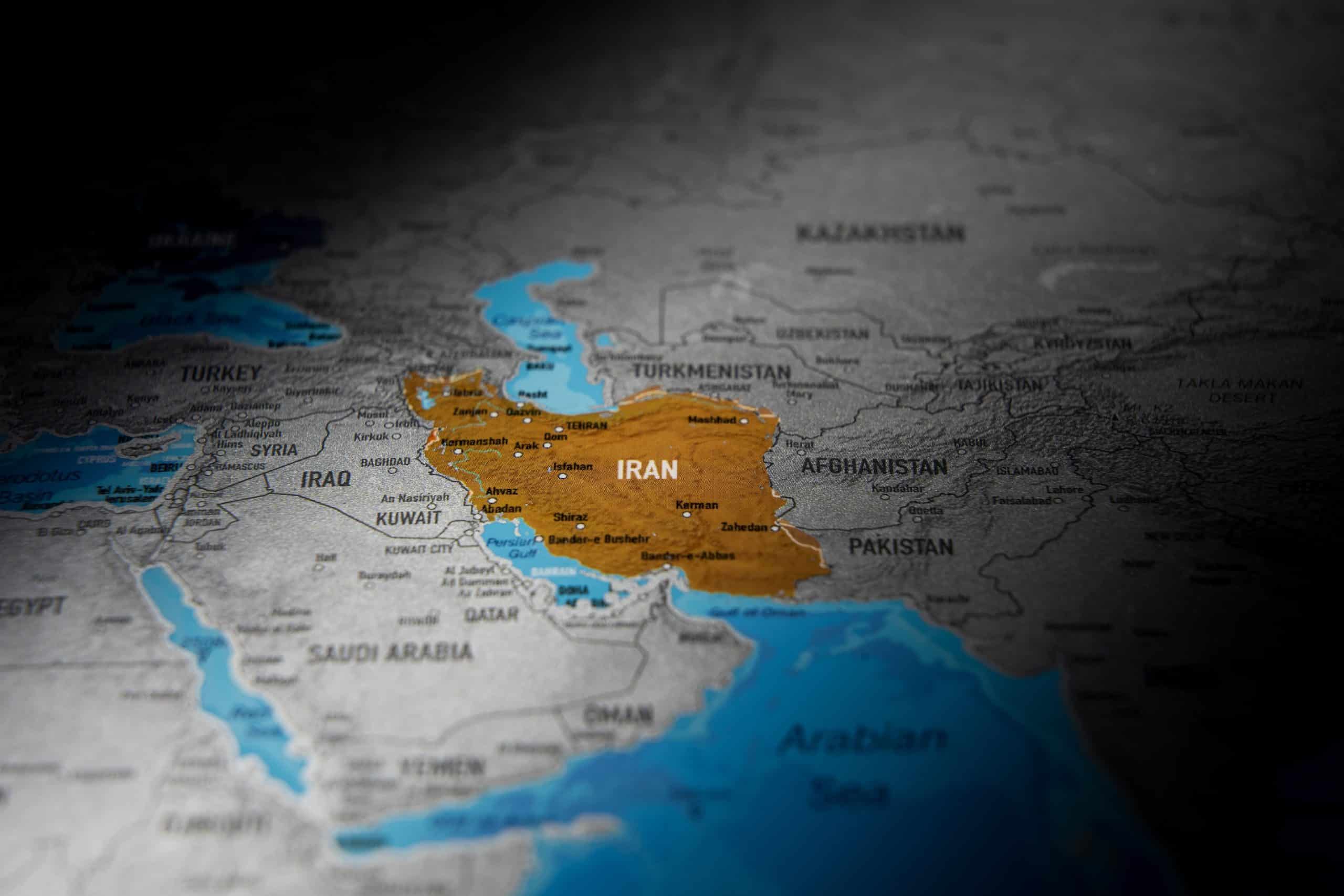
Months after the U.S. agreed to a cease fire with Iran, America has struggled to achieve its core objectives. Iranian military capabilities were severely degraded during the fighting, but neither the U.S. nor Israel has been able to impose its will. Iranian intransigence seems to have surprised American policy makers. One possible reason for this surprise is the relatively unknown nature of Iran’s current leadership. It’s harder for intelligence analysts to predict the behavior of new leaders, a challenge created by the decision to kill Iranian Supreme Leader Ayatollah Ali Khamenei on the opening day of the conflict. Follow-on strikes eliminated other Iranian leaders and caused power to shift from relatively well-known actors to lesser-known replacements.
President Trump confirmed the significance of the shift by saying it wasn’t clear who was in control of Iran since so many of the country’s leaders had been killed. The ambiguity was presented as a positive development, proof of Iran’s weakness and a sign of American strength. The president was right that Iran has not been able to prevent American and Israeli Air Forces from targeting its territory at will, but this probably would have been the case even if Iran’s leaders had not been targeted and killed.
In one way, Iran’s losses have brought a negative consequence to the U.S. and Israel. The transition from known leaders to lesser-known replacements has created ambiguity that made navigating the current conflict more challenging. None of Iran’s new leaders are unknown personalities, but it’s harder to predict the responses of leaders who are filling new positions than it is to do the same for leaders who have held positions over time.
Established leaders have a record of decision making that lends itself to predicative analysis. Miscalculations or unexpected changes in outlook can render these predictions wrong, but they’re more likely to be accurate than predictions about leaders who lack a track record in their current position. This is one significant downside of so-called “decapitation strikes”, military actions intended to kill an enemy’s senior leaders. Intelligence analysts spend years studying foreign leaders to predict how these leaders will react in different circumstances. Making predictions becomes harder as senior leaders are killed and lesser-known replacements take charge.
American and Israeli decision makers must have calculated that targeting Iran’s leaders would degrade the country’s military capabilities and might lead to regime collapse. Even under heavy bombardment, however, Iran’s government continued to function even as it was losing senior figures to military strikes. Killing Iran’s leaders made it harder to predict Iranian actions and hasn’t yet yielded the hoped-for benefits of military collapse and regime change.
Both the Iranian military and the Iranian regime proved to have redundant systems, and both continue to command a degree of popular support. Iran’s leaders are broadly unpopular, but a significant number of Iranians benefit from the current system. These people are willing to support Iran’s new leaders to preserve their own interests, including by armed resistance to the U.S. and Israel. This is especially true of Iran’s Revolutionary Guard Corps (IRGC), a paramilitary and intelligence force that includes many of Iran’s elite. The economic well-being of IRGC members, many of whom have business interests that benefit from government favor and corruption, is dependent on the continuation of the current regime. U.S. and Israeli analysts may have underestimated the willingness of the IRGC’s more junior leaders to take the place of superiors who were killed. The attempt to weaken Iran by targeting its leaders has so-far failed to achieve its objectives, but the effort has historical precedence.
In 1944 a group of German generals tried to assassinate Adolf Hitler when it became clear the war was lost. Field Marshall Erwin Rommel, known as the “people’s marshal” because of his popularity with ordinary Germans, was sympathetic to replacing Hitler even though he wasn’t directly involved in the plot. Rommel might have commanded sufficient public support to form a post-Hitler government had the assassination succeeded. There was a chance that Hitler’s death in 1944 might have led to a new type of regime, but the chance depended on the availability of a leader popular enough to rally the people’s support. The death of Khamenei proved no such figure existed in modern Iran.
U.S. and Israeli strikes have killed Iran’s Supreme Leader, Defense Minister, the commander of the IRGC, the chief of staff of the Iranian Armed Forces, the Secretary of the National Security Council, the commander of the paramilitary Basij, the Intelligence Minister, the Chief of Naval Intelligence, the commander of the IRGC Navy and the chief of IRGC intelligence, among others. Many of the strikes may have been intended to degrade Iran’s military capability, but the killing of the supreme leader, the intelligence minister and the national security council secretary might also have been intended to encourage a reassessment by new leaders in Iran of the country’s strategic interests. The targeting of senior members of the IRGC and Basij may have been intended to make the regime less able to respond in the event of widespread popular unrest, something that seemed possible at the start of hostilities.
Whatever the intended effect, the killing of these officials, especially Supreme Leader Ali Khamenei and National Security Council Secretary Ali Larijani, made predicting Iranian actions harder than it would have been had these leaders continued to control Iranian policy. President Trump was surprised by Iranian attacks against civilian infrastructure and military facilities across the Middle East, surprise that may have been caused by the change in leadership precipitated by the killing of so many Iranian leaders. American analysts may not have known who was making decisions in Iran or how Iran’s new leaders would respond to the initiation of hostilities.
Eliminating enemy leaders can influence internal power dynamics and degrade a country’s military effectiveness. Recent actions in Iran have done both but haven’t created a decisive result. The Iranian regime enjoys support from a sizable minority that benefits from the regime’s existence, and there doesn’t seem to be an Iranian leader willing and capable of rallying Iran’s people against the current government. Given these conditions, the killing of long established and well-studied leaders have made it harder to predict Iranian actions without offering hoped-for advantages. Ending the conflict on favorable terms requires the U.S. to understand how much force will compel Iran to change its behavior. The answer to this critical question might have been easier if Iran’s deceased leaders had remained in power.