Since the beginning of Operation Epic Fury, the United States spent about forty days in major combat operations against the Republic of Iran, followed by just over ninety days of a fragile ceasefire framework and attempted negotiations, punctuated by intermittent kinetic operations.
As Iranian attacks on commercial ships in the strait continued, the Memorandum of Understanding (MoU) and the ceasefire were suspended in July, just twenty days into a sixty-day negotiation period, resulting in escalating U.S. attacks on Iranian military infrastructure and continued Iranian strikes on shipping vessels, Arab states, and U.S. bases in the region.
The breakdown of the MoU and subsequent negotiations, even under a framework with minimal U.S. conditions, demonstrates the inherent difficulty of obtaining concessions from Tehran through diplomacy. U.S. demands have consistently covered a range of issues. Fixed requirements include unrestricted shipping in the Strait of Hormuz, the closure of Iran’s nuclear weapons program, and the safe removal of nuclear material. In addition, Washington stipulates restrictions on Iranian ballistic missiles and one-way attack drones and calls for the curtailment of Iranian support for its regional proxy networks under the Axis of Resistance.
Any one of these demands will be difficult to extract from Tehran through diplomatic efforts, even if catalyzed with economic incentives. This is largely because Iranian military doctrine, which underpins its revolutionary cause, is directly averse to these demands, and has been since the Iranian Revolution and the Iran-Iraq War. As a result, either the U.S., Israel, and Arab states significantly scale back their demands, or the Iranian regime will need to be forced to capitulate or even removed from power.
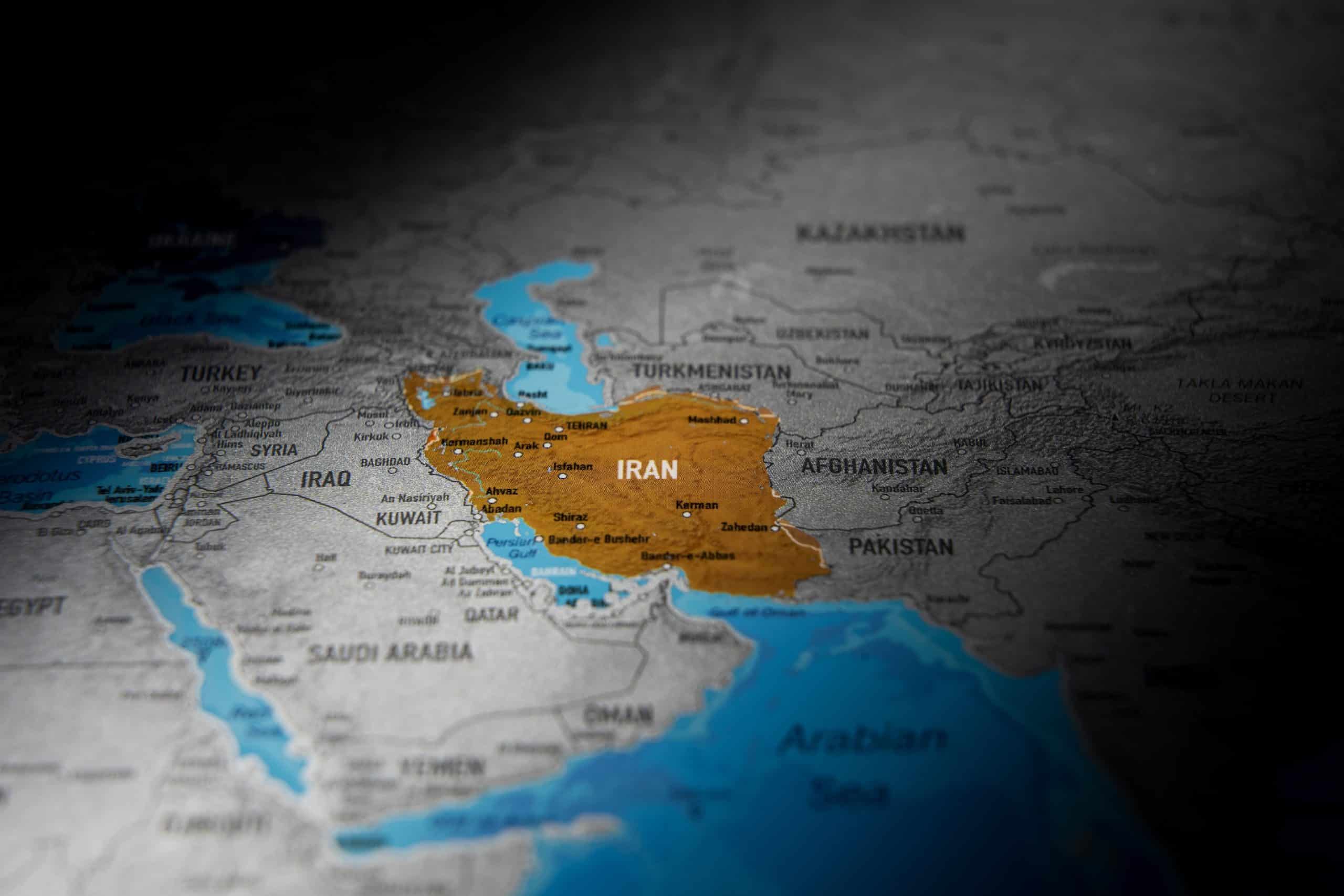
The principal components of Iran’s military doctrine fall roughly into three areas. First, Tehran seeks to both deter foreign states and project power through the development of nuclear weapons, the use of asymmetric warfare (particularly through its navy), ballistic missiles and drones, and the ability to close the Strait of Hormuz. Second, as a revolutionary cause within a state, the regime strives to export the Iranian revolution and its influence through a doctrine of hybrid warfare and its network of proxy groups. And third, the Iranian regime defends against internal counter-revolution through its control of the population and institutions.
Iranian threats to the Strait of Hormuz
Iran’s closure and obstruction of the Strait of Hormuz is a historic cornerstone of the regime’s naval defense. The strategy emerged around 1987 during the Iran-Iraq War as Tehran, outmatched by Iraq’s air force and navy, pivoted to asymmetric naval warfare (e.g., speedboats, naval mines, and fast-attack craft) to target commercial shipping in the Persian Gulf during the Tanker War phase of the conflict.
Because the full closure of the strait is an extreme measure, it remained untested until recently. Given its success, Tehran likely reasons that it can successfully close the strait and threaten the global economy, which it judges to be a deterrent on par with nuclear weapons. Iran, as a result, is attempting to preserve its influence by dictating shipping routes, setting conditions to charge fees or tolls, and maintaining a credible threat to close the strait at any time in the future. The regime is expediting this grand aim through a mixture of diplomatic means and military pressure.
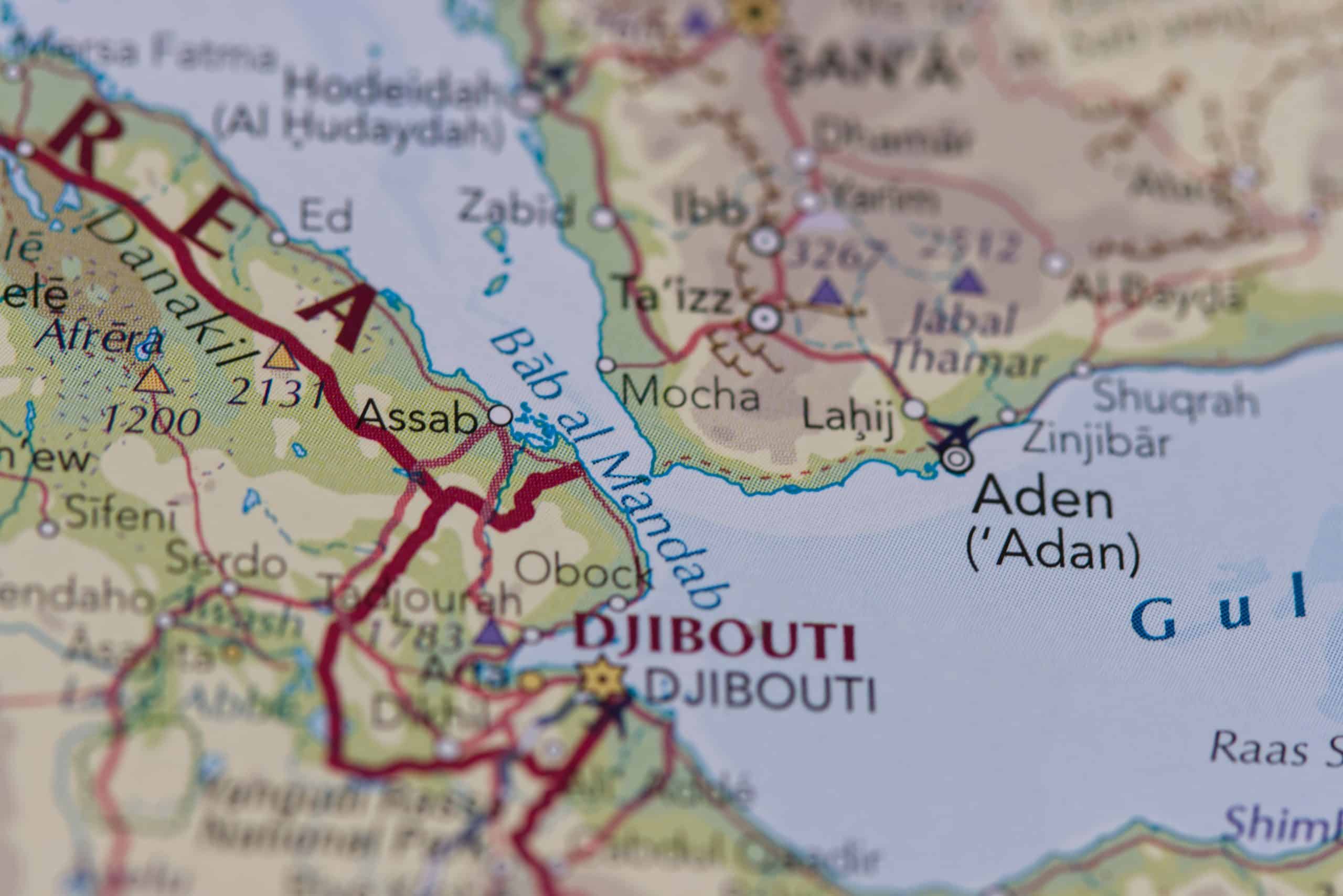
At the diplomatic level, Iran held meetings and has been in communication with Oman and other Arab Gulf states to convince them to work with Tehran to impose fees on maritime traffic and has offered economic incentives for transit fees which, by some estimates, could generate around $40 billion annually. Militarily, Iranian strikes on cargo vessels and threats to do so in the future is an attempt to stop vessels from using the demined route along the Omani coast established by Oman and the International Maritime Organization (IMO) and to force the use of its unofficial route while maintaining overall control over the waterway.
Iranian attacks on commercial vessels in the strait and Arab states are likely tactics to induce states in the region not to support U.S. efforts to undermine Iranian control of the strait. Even as these tactics have precipitated the resumption and escalation of U.S. strikes and the naval blockade, Iran’s continued refusal to open the strait signals that control over the waterway is of greater importance to Tehran than a ceasefire. The resumption of U.S. sanctions and the naval blockade (estimated to cost Iran over $400 million in lost revenue), further signifies that control of the strait is also more valuable to Iran than economic gains.
Similarly, during U.S.-Iran negotiations prior to the July 8 suspension of the ceasefire, the U.S. attempted to convince the Iranian side that a diplomatic agreement would financially benefit Iran more than collecting tolls. U.S. diplomats also offered to release billions of dollars of unfrozen funds if Tehran would relinquish its claim to control the strait and renounce toll payments. The regime rejected the offer, insisting that the Hormuz littoral is “under Iran’s command,” not the United States’, and continued strikes on commercial shipping.
Iran’s pursuit of nuclear weapons
Between the 1980s and early 1990s, Iran’s nuclear program grew from a dormant civil initiative to become a covert, dual-track (civilian and military) effort. This shift was initially driven by security concerns that arose from the Iran-Iraq War; in particular, Baghdad’s use of chemical weapons and its pursuit of its own nuclear capabilities. In the late 1990s, Tehran’s AMAD Plan (or AMAD Project) sought to produce five nuclear weapons by 2004. However, in 2003, the regime “voluntarily and temporarily” suspended the program under international pressure while faced with a tangential threat from the U.S. invasion of Iraq. Tehran later resumed enrichment activities in 2006.
Iran’s nuclear program is crucial to its security and its wider military doctrine. A nuclear deterrent would fortify Tehran against foreign interventions, particularly from the United States and Israel, while creating a shield against reprisals that would enable it to bolster its asymmetric warfare and proxy networks. There are also concerns in the region and beyond that Iran could use these weapons offensively, either directly or through its Axis of Resistance or other actors.
At present, the regime appears to be attempting to retain all or part of its program. Iranian officials, such as Commander-in-Chief of the Islamic Revolutionary Guard Corps (IRGC) Ahmad Vahidi, have not been willing to cede ground on key nuclear issues, such as Iran’s highly enriched uranium stockpile and its ability to enrich uranium on Iranian territory. Although the U.S. administration maintains that Iran agreed to inspections by the International Atomic Energy Agency (IAEA) (Tehran denies this claim), the IAEA alone (without U.S. leverage) has not been able to monitor Iran’s nuclear program sufficiently.
It is possible that, under sustained military pressure from Washington, sanctions, and the naval blockade, the regime may give in to U.S. demands and dismantle the program. However, given that Iran considers its nuclear ambition foundational to its military doctrine and even its survival, it is likely that such concessions would be more in line with what the regime terms a “tactical” or “strategic retreat,” in which it could again renew the program at a later date (or even under a different U.S. administration) as it did in 2006.
Tehran has also reiterated its claim to only be in pursuit of a civilian nuclear program and its perceived right to do so. During the ceasefire in late June, Iranian President Pezeshkian stated,
What the United States demands is that Iran not build an atomic bomb. This is nothing new, and we can also state in writing that we have no intention of building a bomb… However, we will not relinquish our right to enrichment, and the other side will have no choice but to accept this right.
While Tehran is willing to commit in writing not to produce a nuclear weapon, Iran has historically insisted that its nuclear program is for civilian use while simultaneously developing the latent capability to reach weapons-grade enrichment at a time of its choosing, a strategy termed “nuclear hedging.” Hence, Iran’s promise to only use its nuclear program for civilian purposes is not likely to satisfy Washington.
Iranian missiles and drones
During the Iran-Iraq War, Iraq’s use of Soviet-supplied Scud missiles to bombard Iranian cities, including Tehran, persuaded Iranian leaders that ballistic missiles were essential both to deter foreign aggression and to project power. Iran has since built an extensive inventory of missiles and drones. Last year, the U.S. Office of the Director of National Intelligence’s Annual Assessment warned, “Iran continues to bolster the lethality and precision of its domestically produced missile and UAV systems, and it has the largest stockpiles of these weapons in the region. It considers them as critical to its deterrence strategy and power projection capability…”
Iran’s missile and drone stocks represented a growing threat, as well as a powerful shield that was part of Washington’s calculus behind Operation Epic Fury. In March, Secretary of State Marco Rubio reported that Iran was producing more than one hundred short-range missiles per month (out pacing defensive interceptors), building what he described as a layered conventional arsenal designed to deter retaliation and shield its nuclear ambitions, asserting, “there would come a point where they have so many conventional missiles, so many drones, and can inflict so much damage, that no one can do anything about their nuclear program.” Iran’s development of hypersonic missiles also concerned Washington.
In the past, Iran has fired missiles at Israel (and occasionally at U.S. bases preceded with warnings); however, the current war in Iran now involves attacks on Arab Gulf states and U.S. military bases, which could become a continuing security threat. Recent assessments also suggest that Iranian attacks in late February extensively damaged Naval Support Activity (NSA) Bahrain, the U.S. Navy’s main operating base in the Middle East, causing the Pentagon to reconsider its force posture in the region as Iranian missiles and drones extend their reach. The Iranian regime is also discussing the expansion of its missile range beyond the 2,000-kilometer (self-enforced) limit, and even the development of intercontinental ballistic missile capabilities.
Tehran also provides missile and drone technology to its Axis of Resistance, particularly Hezbollah and the Houthis (and even to Russia), which compounds regional instability. Although Operation Epic Fury and Operation Roaring Lion diminished Iran’s drones, missiles, and launchers, according to some estimates, Tehran’s ability to replenish and advance its missile and drone program is beyond expectations.
During a press conference at the G7 summit in mid-June in Évian, France, President Trump suggested that upcoming negotiations based on the MoU may place limitations on Iranian missiles and drones that would allow a “proportional arsenal” for a limited defense. He added, “The Gulf nations will address the non-nuclear issues, as we’ll be talking about the ballistic missiles. And we’ll talk also about the terrorist proxies that they have…”
Iran, however, has refused to negotiate Tehran’s missile program, arguing that these weapons are essential to its national sovereignty and deterrence. President Masoud Pezeshkian further excluded any discussion over missiles in late June, stating, “If we did not have our missiles, which are for our self-defense, Israel and America would have plowed through Iran the way Gaza was plowed through… The discussion over our missiles does not exist in the MoU, and it never will.”
Iranian proxy warfare
Iran’s doctrine of proxy warfare is its key means of external influence. The regime in Tehran began its development of proxy forces early, following its revolution. Initially, Tehran worked with militia groups in Afghanistan in 1979, which would later join Iran in its conflict against Iraq. In Iraq, Iran worked to form the Badr Brigades from Iraqi Shia exiles, defectors, and prisoners of war who had fled Saddam Hussein’s regime. The paramilitary group supported conventional Iranian forces in the Iran-Iraq War and engaged in cross-border raids into Iraq.
Although Iran shifted the use of its foreign militias to support its more immediate conflict with Iraq, as a revolutionary cause within a state, the regime’s original purpose was grounded in a vision of external influence and the exportation of the Iranian revolution to the region and beyond. Hence, in 1982, while engaged in the conflict with Iraq, Iran deployed approximately 1,500 IRGC advisers to Lebanon’s Bekaa Valley to train, fund, and organize Shia militias into what became Hezbollah.
Later, following the war with Iraq, Supreme Leader Ali Hosseini Khamenei continued his vision of exporting Iran’s revolution in the region (and beyond) by the expansion of the IRGC and the creation of a new and separate branch dedicated to the regime’s extraterritorial activities: the Quds Force. The Quds Force became the principal executor of Iran’s militia doctrine under the leadership of General Ahmad Vahidi, who currently serves as the Commander-in-Chief of the IRGC, considered by some experts to be the most influential member of the current regime in Tehran.
Iran’s Axis of Resistance, while not as strong now as it was at its peak, remains powerful and has exerted significant military and political influence in Lebanon, Iraq, Syria, and Yemen, while also supplying military support to groups in Gaza and the West Bank, Afghanistan, and Pakistan, with tentacles reaching beyond the region. Unless forced, Iran will almost certainly not pull back from its Axis of Resistance, which took decades to build, and will instead probably seek to restore and expand its proxy network.
During negotiations, U.S. diplomats attempted to address key issues under the MoU while leaving other areas, such as missile and drone development and Iranian proxies, to be addressed later, using economic incentives as a key tool of influence. Along these lines, in June, Vice President JD Vance confirmed that negotiations will stipulate that Iran must not continue to fund proxy groups in the region as a prerequisite for receiving any sanctions relief or frozen assets.
Just as economic incentives were insufficient to inspire Iran to open the strait, they are unlikely to coax Tehran to halt or even curtail support for its proxies. During U.S.-Iran negotiations, Tehran made statements that the regime may use any economic relief from the MoU to reconstitute its military capabilities, and IRGC Commander Major General Ahmad Vahidi similarly insisted that Iran’s frozen assets should not be “barred from military spending.” There are also claims that mechanisms of conditional funding may not be realistically enforceable and, on their own, are insufficient to compel Iranian behavior regarding its military doctrine.
Iranian suppression of its population
Finally, Iran’s commitment to control its population and quell internal dissent is critical to its military doctrine and revolutionary mission. This is the case in part because a counter-revolution within Iran would delegitimize the regime and its political ideology (Velayat-e Faqih). Hence, Tehran controls the Iranian population at home through digital repression, ideological laws and, in cases of dissent or protest, domestic suppression through arbitrary arrests, forced confessions, and executions enforced by the IRGC and its Basij militia, the Minister of Intelligence and Security (MOIS), and the Law Enforcement Command (FARAJA).
If the current regime continues governing Iran, it will likely face trials in reestablishing its credibility and authority. According to some assessments, the conflict with the U.S. and Israel and the government suppression of protests that killed thousands and arrested tens of thousands of Iranians has delegitimized the regime in a way that it can never fully recover, and may lead to additional crackdowns in an attempt to retain control.
There is evidence that the Iranian government is concerned about potential domestic unrest. In June, the regime in Tehran reportedly shifted from the use of “purely defensive reactions” to an “active deterrence” doctrine, and in July has attacked militant Kurdish groups near the Iran-Iraq border. Supreme Leader Mojtaba Khamenei has also reappointed Gholam Hossein Mohseni Ejei as judiciary chief. Ejei has historically taken a severe stance against regime dissidents, and his reappointment suggests that the regime is not planning to ease political repression but is instead preparing to reinforce its institutional domestic political control.
The U.S. did not address protections for Iranian citizens in MoU negotiations but continues to pressure the Iranian regime on human rights through softer means such as unilateral sanctions, public diplomacy, and international accountability mechanisms. Washington may be using less direct means of leverage because it has backed away from regime change. It may also be an attempt to address more immediate issues first, or even the outcome of a loss of U.S. leverage as Iran threatens the global economy. Regardless, Tehran’s domestic control of its citizens is grounded in its military doctrine and continued existence and, as such, presents another area of divergence that will be difficult to solve diplomatically.
Conclusion
Iran’s military doctrine, which has developed since the Iran-Iraq War, is closely linked to the regime’s revolutionary cause and even its survival. As a result, negotiations over key issues of this doctrine, such as its nuclear program, control of the strait, ballistic missiles and drones, proxy warfare, and internal control over the population, are inextricable from the regime itself. There are differing factions of regime hardliners and “less extreme” elements that, under pressure, could render concessions; however, analysis suggests that both groups, while advocating different tactics, share the same strategic goals.
Hence, while it is possible that the regime returns to negotiations, Tehran is not likely to render many concessions, if any, and those that it does, it will probably view as rescindable at a later date. As a result, the U.S. administration has been left in a position in which it can either accept a deal that only temporarily and partially sets back Iran’s military doctrine or, as it appears to be doing, increase military pressure to force capitulation or even regime change.