As both the U.S. and Iran have climbed the escalation ladder, the Strait of Hormuz — and with it, international maritime trade and energy markets — has been subjected to a consequential chokehold. As the U.S. conducts strikes on major infrastructural sites, weapons depots, and Iranian political leadership, one of the most effective instruments that Iran has identified amidst American pressure has been an embargo on all maritime traffic through the narrow Strait of Hormuz, enforced with indiscriminate strikes on any vessel that dares to pass through.
It’s estimated that at least 25% of seaborne oil and liquefied natural gas (LNG) pass through the Strait of Hormuz, in addition to byproducts like petroleum, fertilizers, petrochemicals, feedstocks, and plastics, as well as global trade products. While the Strait is narrow, it is one of the shortest ways for maritime vessels to traverse between Europe, Africa, and Asia, serving as a ‘short cut’ that bypasses the lengthy journey of rounding the Horn of Africa or moving through the narrow, sometimes-overcrowded Suez Canal. Given Iran’s increasingly aggressive posture over four decades in the Middle East, the Strait was always perceived with degrees of vulnerability, though remained largely accessible due to its profound significance for international commerce.
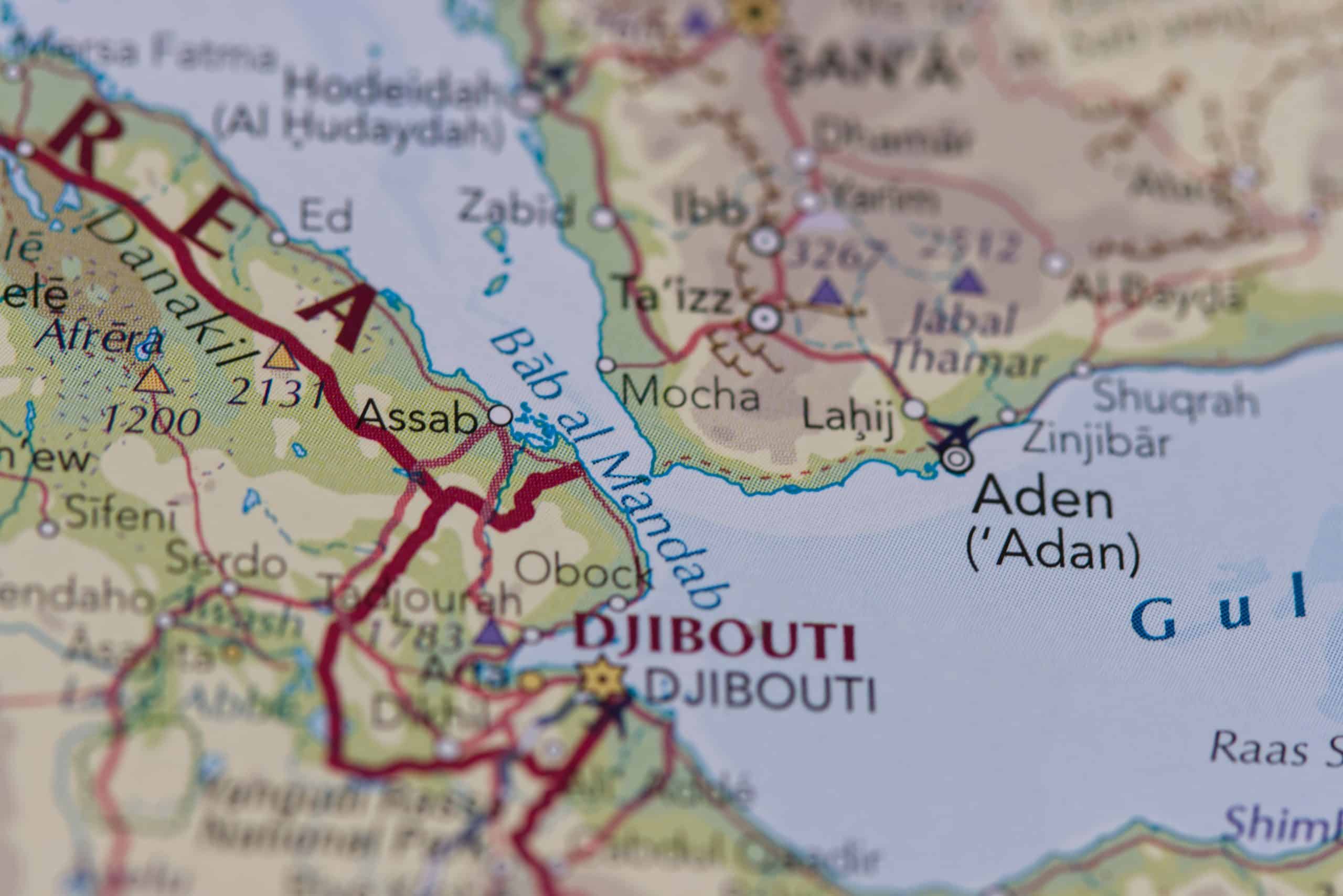
But when Iran began to wield an embargo over the Strait of Hormuz as one of its most prized instruments in its toolbox — rattling global cost of living and economic growth with skyrocketing costs for transport, manufacturing, electricity, agriculture, and shipping as the cost of crude transcended $100 per barrel. This has been compounded by the Houthis’ blockade of the Bab al-Mandab Strait, another narrow corridor that enables the passage of commercial ships between Yemen on the Arabian Peninsula and Djibouti and Eritrea in the Horn of Africa, connecting the Indian Ocean with the Red Sea and Gulf of Aden.
Even if the war ended with a durable ceasefire and political agreement tomorrow, public trust in safe passage through the Strait of Hormuz has been irreparably damaged. The on-again-off-again dynamic of the Trump administration’s diplomacy style has created a looming sense that escalation could, at any moment, reemerge with Iran. Iran has also learned the sheer geopolitical power that a shutdown of the Strait, no matter how long, can have on international markets, likely incentivizing Tehran to wield blockades as a pressure tactic against its adversaries more frequently in the future. The staying power of escalation will drive up insurance premiums and freight rates for shipping companies, given this unstable, unpredictable dynamic, incentivizing ships to take longer routes with more time-intensive voyage timetables. The knock-on effects of the U.S.-Iran war paint a poor picture for international trade and energy markets well beyond a ceasefire and peace deal, inspiring policymakers to scramble for alternative options beyond the Strait of Hormuz.
As the war between the U.S. and Iran has played out, governmental officials, researchers, trade specialists, and academics have generated lists of alternative infrastructure to the increasingly dangerous Hormuz Strait. Some have focused on more direct export of energy products to destination markets, while others have focused on options for maritime vessels seeking routes that do not severely extend their routes. There have been proposals to accelerate capacity in Saudi Arabia’s East-West Pipeline to the Red Sea, scale up the UAE’s Abu Dhabi Crude Oil Pipeline (ADCOP) pipeline, construct the proposed Basra-Aqaba Pipeline, a suggestion to establish a Basra-Oman or broader Iraq-Kuwait-UAE-Oman route, and multimodal trade corridors and instruments such as railways, highways, pipelines, fiber optic cables, and even electricity networks. Though many of these options fall short in either their expense, limited scope to domestic production, exposure to broader regional risks and actors, and/or their inability to completely replace the scale of commodities that have traditionally routed through the Strait of Hormuz.
Perhaps one of the alternative ideas that has generated great levels of interest amongst officials in the region and in Washington has been the Kirkuk Baniyas- Pipeline between Iraq and Syria, accompanied by a plan broadly known as the “Four Seas Initiative” that comprises a series of infrastructural networks that connect the region with the Mediterranean Sea. It has been the sudden, unexpected collapse of the former Assad regime —a regional pariah that many Middle Eastern counterparts refused to engage with — that has made the proposal possible. Syria’s central position and access to the Mediterranean Sea offers countries straddling the Gulf with existing or out-of-commission infrastructure a short-cut. By directing energy flows and products through Iraq, then Syria, and into the Mediterranean, exporters are able to remove several maritime components from the journey, bypassing the Arabian Sea, Red Sea, and the narrow and costly journey through the Strait of Hormuz to reach the Mediterranean.
However, this plan is contingent one key element that Syria — even in its post-Assad chapter — does not possess entirely: stability. Though some assessments assert that it could carry up to between 1 or 1.5 million barrels daily, the Kirkuk-Baniyas Pipeline is fraught with questions about its own security. The currently defunct pipeline has been interrupted in years past, due to security complications. Established in 1952, the pipeline’s service was suspended several times during key bouts of instability, during the 1956 Suez Canal Crisis, during the Iran-Iraq War in the early 1980s to early 2000s, with talks to revive the pipeline falling through since the 2007, due to geopolitical divergences and the estimated cost of reconstruction. During the timeline of talks and cycles of regional escalation, pumping and export stations have been struck by rockets and missiles, pipeline components stolen by local criminal networks, and the pipeline’s transnational infrastructure has ultimately weakened. As now, the pipeline is expected to cost 4.5 billion USD, with the timeline for reconstruction lasting at least three years.
Furthermore, these plans require intense momentum and long-term confidence for sustained investment. The Four Seas Initiative would demand millions of dollars in building the infrastructure for either building or reconstructing pipelines, storage terminals, pumping stations, port mechanisms, and electricity to sustain these services. Syria is emerging from over a decade of a complex sanctions regime imposed on not only Assad regime officials and family cronies, but key sectors of the Syrian economy. While sanctions imposed on Syria have on the whole been lifted by governments, the act of re-familiarizing investors with Syria’s economic sectors, clarifying the absence of sanctions, identifying the key players in Syria’s economy, and restoring confidence will take time, likely several years. As a result, there will be no ‘quick fix’ in identifying an immediate alternative to the Strait of Hormuz in Syria.
As with any cross-regional infrastructure endeavor, it takes two (or more) to tango. The proposed projects under the Four Seas Initiative does not require stabilization efforts and active engagement from the new Syrian government, but careful cooperation and relationship building between Syria and its neighbors. While the new Syrian government has prioritized building its external partnerships after the fall of Assad, some relationships have been slower to build than others. While the new administration in Damascus has been able to build sustainable relationships and multidimensional bilateral agreements with Türkiye, Saudi Arabia, and the U.S., tracks with countries like Iraq and Lebanon have been a slower process.
After witnessing how different conflicts can converge and paralyze key commercial chokepoints throughout both the Gaza and Iran War, it is clear that the way out of the Strait of Hormuz conundrum will not be replacing one singular trade route, pipeline, or highway with another. Instead, diversification is the key to weakening the chokehold that state and non-state actors can wield over key trade corridors like Hormuz or Bab al-Mandab. While Syria’s Four Seas Initiative is one that holds ambitious but limited promise — only possible through long-term stability — governments and private sector actors should also entertain several plans to improve commercial and energy infrastructural diversification, avoiding putting all of their ‘eggs’ into one, singular ‘basket’.