NATO’s ability to adapt to internal divisions and external threats was tested again during the 2026 NATO Summit on July 7-8 in Ankara, Turkey, which began under a cloud of uncertainty. Questions surrounding the US commitment to the Alliance, disagreements over burden-sharing and defense spending, and emerging security challenges in Europe, its periphery, and beyond added heavy pressure on the Alliance. While the Summit did not eliminate these concerns, it offered measured optimism and reassurance under NATO 3.0.
NATO 3.0 presents both risks and opportunities that require commitment and burden-sharing among member states. Since its establishment in 1949, NATO has adapted its deterrence and defense strategies, evolving over the years in response to changing threat actors and the security landscape. NATO 1.0, which was primarily based on Cold War rationale, was built to contain the Soviet Union. NATO 2.0 refers to the post-Cold War period, which was dominated by responding to terrorism following the al-Qaeda terrorist attacks on September 11, 2001. NATO invoked Article 5 for the first time in its history, framing the al-Qaeda attacks as an act requiring collective defense in support of the United States against a non-state actor.
NATO 1.0 and NATO 2.0 approaches cannot fully address the social, political, economic, and military landscapes shaped by the evolving global order, the Russian invasion of Ukraine, China’s global reach, and the evolving nature of terrorism and other nontraditional threats, including cyberspace. NATO 3.0, on the other hand, should reflect evolving threat posture and response strategies, which include both state and non-state actors. This blended threat posture is reflected in the Ankara Summit Declaration as “the long-term threat Russia poses to Euro-Atlantic security and stability, and the persistent threat of terrorism.”
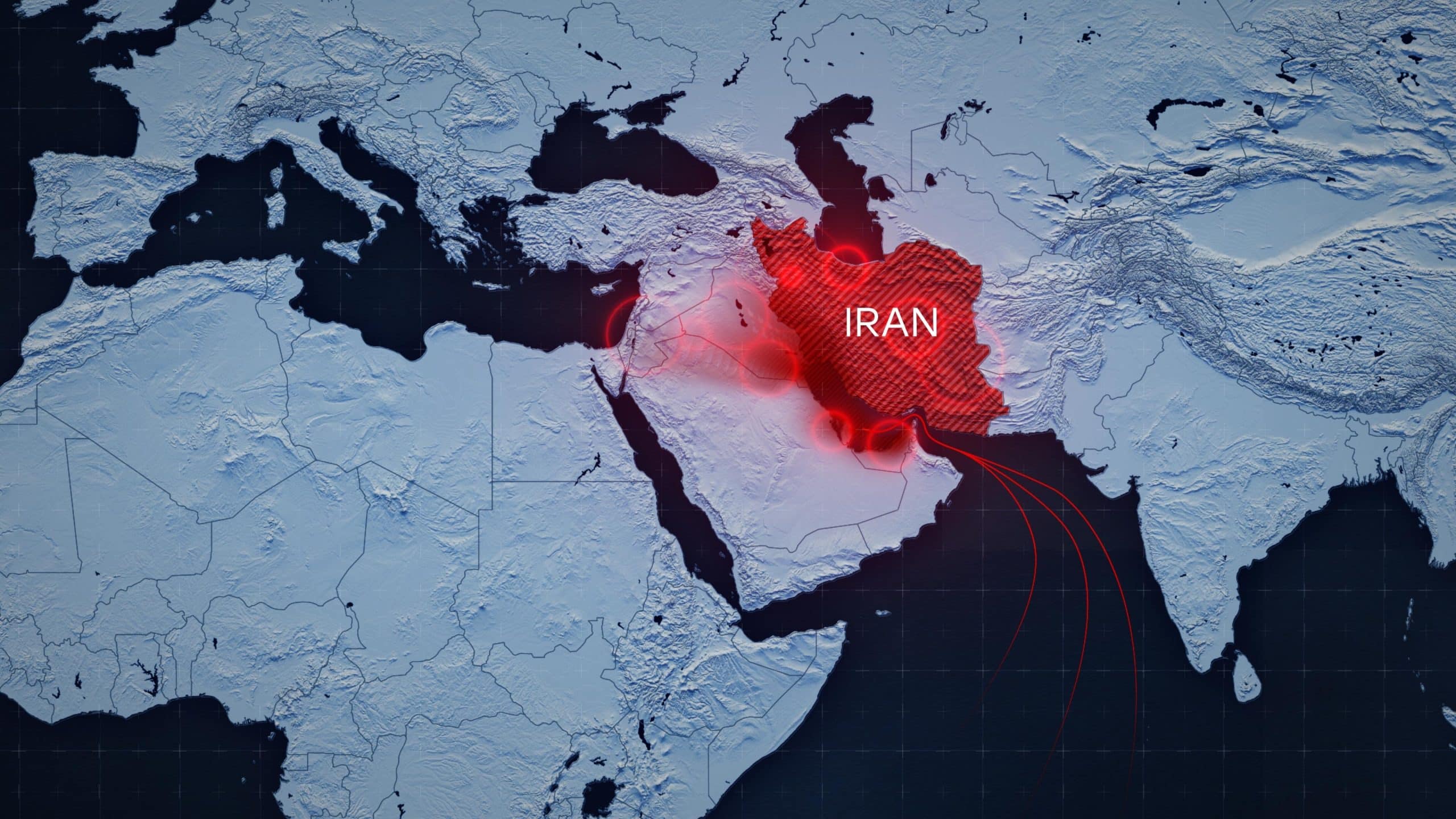
Europe is facing mounting security challenges in Eastern Europe- Ukraine and Moldavia, the Western Balkans, the South Caucasus, the Sahel, and the Maghreb in Africa, and the Middle East, including the Israel-Palestine conflict, the US-Israel and Iran war, etc. To counter existing and future security threats, Europe would need to do more than rely heavily on US support and defense reassurance.
Initially, the NATO 2026 Summit was overshadowed by deep concerns that the US, under President Trump, might have left the Alliance. For too long, European policymakers believed that NATO and US support within NATO would prevent any war in Europe, which led to demilitarization and a decline in investment in defense and deterrence. This rather perception, which has taken US support for granted, has proven short-sighted and a failure to assess the post-Cold War era. Despite warnings from previous US officials about this near-existential misperception, the European defense posture has remained largely unchanged until recently. For example, almost 15 years ago then US Secretary of Defense Robert Gates of the Obama Administration voiced the US disapproval of Europe’s complacency over international security and lack of commitment to increase defense spending in line with NATO commitments. “If the current trends in the decline of European defense capabilities are not halted and reversed,” Gates said, “future U.S. political leaders—those for whom the Cold War was not the formative experience that it was for me—may not consider the return on America’s investment in NATO worth the cost.”
During his first term, President Trump conditioned US support for NATO allies on their contribution to the Alliance. His position has become more assertive, as he has openly and repeatedly criticized European allies’ reluctance to increase their defense spending. He even threatened them with the US leaving NATO once and for all. Despite such concerns, the Summit emerged as a unified Alliance once again. President Trump started the summit by lashing out at the Europeans for not providing support for the U.S. war with Iran. However, after the leaders’ closed-door meetings, President Trump expressed a highly positive view, saying, “There was a lot of love in that room, a lot of unity.”
The second important takeaway from the Summit is that NATO members have a consensus on “the long-term threat Russia poses to Euro-Atlantic security and stability and the persistent threat of terrorism”. More importantly, the Summit Declaration details the steps the allies are taking to counter these threats, including “delivering the capabilities,” strengthening NATO’s “industrial base and resilience,” committing to “expanding collective manufacturing capacity” and accelerating innovation.
Third, reaffirming “unwavering support for Ukraine” showed a unified NATO against Russia, pledging €70 billion in military equipment, assistance, and training, and maintaining support at least at equivalent levels in 2027. While the US will not contribute to this aid, the Trump administration has provided Ukraine with something else: “a license to produce Patriot missiles in Ukraine,” which could be a crucial tool in defense against Russia’s targeting of civilians and critical infrastructure.
Moreover, the Declaration emphasizes “a stronger Europe in a stronger NATO,” with European Allies and Canada taking greater responsibility while working with the United States. NATO members also committed to delivering the Alliance’s capability targets in areas including both kinetic warfare and intelligence capabilities, and to “developing an interoperable transatlantic warfighting cloud and adopting powerful AI models.” NATO 3.0 also reflects, as some call it, the Europeanization of NATO, referring to European countries’ increasing financial and military investment in NATO.
Another worthwhile outcome of the summit was Turkey’s realignment with NATO after years of dispute over the purchase of Russian S-400 missile defense systems and its disruptive behavior at previous NATO meetings, especially when Ankara initially blocked Sweden and Finland‘s NATO accession bids. Ankara’s pursuit of rapprochement with Russia has come at the expense of Turkey’s decades-long alliance with NATO—and at a considerable cost. The policy has failed on multiple fronts: Turkey has been unable to activate the Russian-made S-400 system, has faced U.S. sanctions under the Countering America’s Adversaries Through Sanctions Act (CAATSA), and was expelled from the F-35 fighter jet program. Ankara has since come to recognize, rather agonizingly, the vital security umbrella NATO provides, particularly after NATO defense systems intercepted Iranian ballistic missiles targeting Turkey. Hosting the NATO summit, Ankara appeared eager to realign itself with the Alliance’s defense and security priorities, including through its active participation in NATO’s military mission in Estonia.
The 2026 NATO Summit Declaration, if fully implemented, signals a critical shift in NATO’s transition from strategic reassurance and commitment to concrete operational implementation. It prioritizes increased burden-sharing among European NATO member states through higher defense spending, expanded procurement, and stronger defense-industrial capacity. The Declaration also highlights NATO’s future defense posture, which will depend on cyber capabilities, AI, autonomous systems, integrated air and missile defense systems, and a more robust defense industrial base.
While it will take more than pledges and claims of unity, and a commitment to delivering results, time will show to what extent “a stronger Europe in a stronger NATO” will also lead to a stronger, more deterrent Alliance.