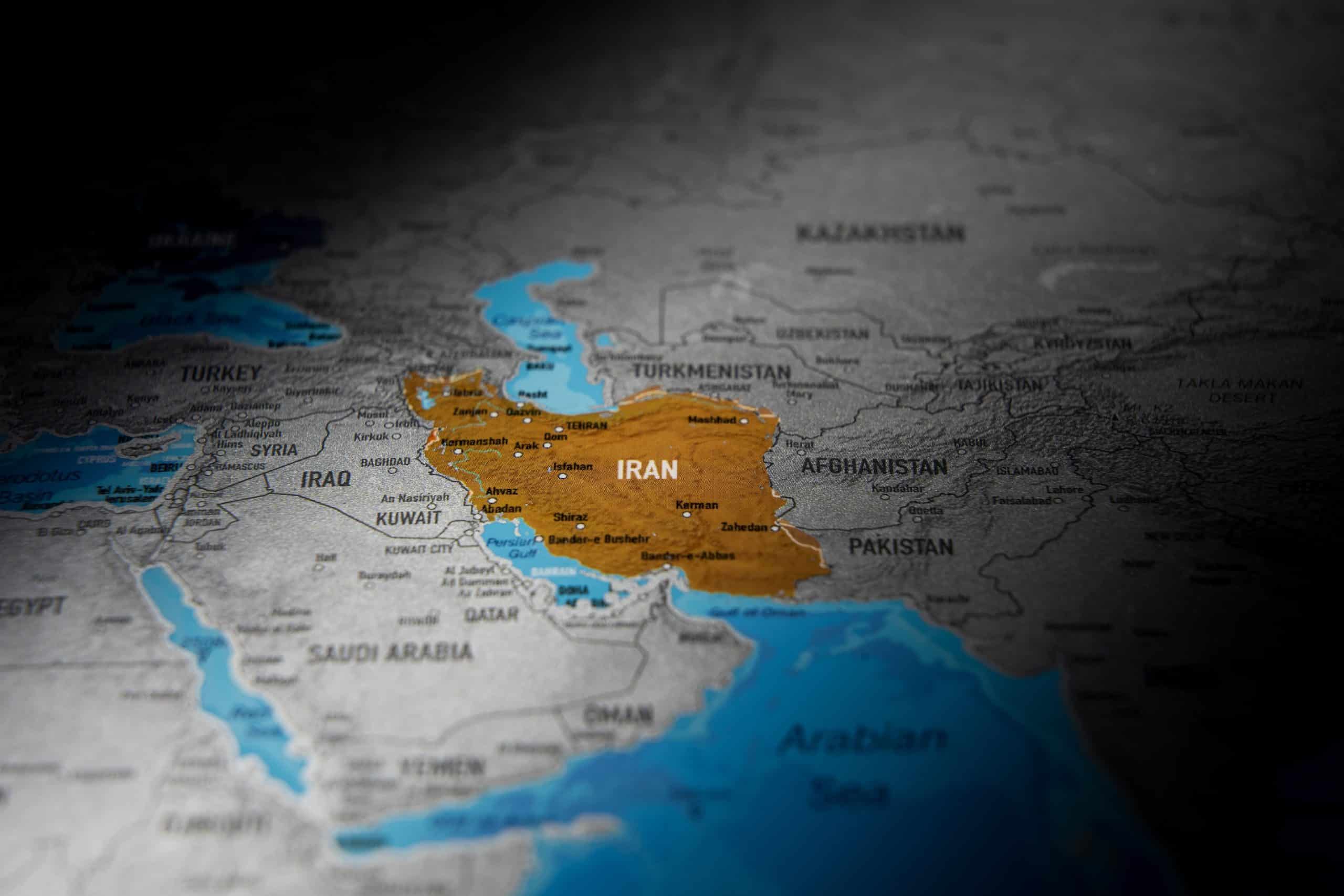
President Trump’s decision to undertake military operations against Iran was a bold, albeit risky move that has the potential to reshape the Middle East. As casualties mount on both sides, it’s critical that the U.S. government determines it’s aims. So far, the administration hasn’t been clear on what it hopes to accomplish and different officials have offered different justifications for the military action now underway. Despite the confusion, regime change is a legitimate objective if Iran’s people are in the lead. Otherwise, the U.S. should recalibrate its expectations and pursue more limited goals.
Iran’s government is unpopular with its people. A Gallup poll from 2024 found less than half of Iranians support the current regime, and other polls indicate even lower levels of support. Every few years large numbers of Iranians take to the streets to protest their government and each time the regime meets their demands for change with brutality. The protests that precipitated the current conflict, which began in December 2025 and continued into January, were the largest since the establishment of Iran’s current government in 1979. The protests were driven by falling standards of living and a population that’s tired of living under a government that destroys its prosperity and prospects.
At least seven thousand Iranians were killed by regime forces in the effort to suppress protests, forcing people off the streets but increasing the level of resentment many Iranians feel toward their government. Few people want to live in a country that guns down thousands of its citizens while they protest for freedom and a better life. Most Iranians are tired of their country’s isolation and their government’s allocation of limited resources to misadventures around the world.
Supporting Iran’s weakened but still extensive network of proxy organizations consumes a significant portion of Iran’s resources, resources that aren’t available to build infrastructure, fund education or purchase basic goods that are often in short supply. A large portion of Iran’s population is seething against its government and would welcome a change in regime. The U.S. must be careful, however, to ensure that change begins with the Iranian people. The U.S. military can and should support the Iranian people if they rise against the government, but the U.S. can’t take the lead.
Israel’s killing of former Iranian Supreme Leader Ali Khamenei may turn out to be advantageous, but it risks changing the narrative of the conflict in unhelpful ways. For regime change to be successful, the Iranians must be the ones to take the hardest actions, and holding Khamenei responsible for his crimes would have given them a chance to begin determining their future. If the U.S. and Israel topple the Iranian government, the world and the Iranians themselves will have a hard time knowing if they were ready to sacrifice to effect change. If Iranians have the resolve to overthrow their government, there’s a good chance they have the fortitude to undertake the work of building a new type of nation.
The American experience in Iraq and Afghanistan showed that removing a government doesn’t lead to lasting success if the people in a country aren’t ready to sacrifice for their future and don’t have a vision of what that future might look like. U.S. and Israeli military forces can shield and support Iranians as they move against their regime but can’t substitute their military power for Iranian resolve.
If Iranians aren’t ready to assume the risks of replacing their government, the U.S. should limit its objectives to something less than regime change. U.S. military power should continue to weaken Iran’s air defenses, target its ballistic missile facilities and otherwise inflict tremendous damage on the Iranian Revolutionary Guard Corps (IRGC). The punishment should be severe enough that Iran agrees to end its support for its regional proxies, halts nuclear enrichment, curtails its ballistic missile program and refrains from massacring its people.
All these gains will be temporary, and if Iran’s regime survives, it’s sure to reconstitute any capabilities it agrees to limit as part of a peace deal. Even a temporary reprieve, however, from the threat Iran poses would be a useful outcome to the current situation. Weakening Iran for the next five years and limiting its ability to influence the region may be the best we can hope for if the Iranian people fail to rise and the regime survives. Critics will find fault in this limited time horizon, as they did with the limited time frame on the now defunct Joint Comprehensive Plan of Action, but sometimes foreign policy is about managing problems when solving problems isn’t possible.
At the moment, the primary goal of U.S. action should be regime change. The current Iranian government is unlikely to ever give up power peacefully and equally unlikely to alter its disruptive foreign policy. Most of Iran’s people are ready for a change and the Middle East can’t reach its potential as long as Iranian missiles and militias exert influence in the region.
Iranians should take advantage of this moment and move against their government if they’re serious about regime change, hopefully with support from Iran’s conventional military, which is separate from the IRGC. Doing so will take immense bravery, and sadly, the possibility of a significant loss of life. The alternative, however, is to continue living under a repressive regime that relies on violence to stay in power.
If Iranians prove unable or unwilling to seize power from the current government, it still makes sense for the U.S. to take advantage of Iran’s current weakness to make it even weaker. If the regime survives, better it does so in a diminished state from which it takes years for the country to recover.
The worst possible option is the pursuit of regime change if the Iranian people refuse to rise. Secretary of Defense Pete Hegseth refused to rule out the use of U.S. ground troops, an option that seems highly risky and reminiscent of earlier mistakes. The only circumstance under which the introduction of even limited ground forces should be considered is if they’re operating in support of a mobilized and friendly population. Hegseth was right not to telegraph our operational constraints but let’s hope that U.S. policy makers aren’t seriously considering even a limited use of ground forces unless the Iranian people are leading a revolution. The U.S. cannot and should not lead a revolution on their behalf.
*image credit: AA.