Editor’s Note: This policy brief is Part V of an Orion Policy Institute (OPI) Transnational Crime Project (OPI-TCP) series.
While unprecedented and unexpected, it increasingly appears that the United States’ capture of Nicolas Maduro in January 2026 was more than an isolated regional event. Instead, it was a broader strategic step in support of the National Security Strategy’s plan to “reassert and enforce the Monroe Doctrine to restore American preeminence in the Western Hemisphere” while also preventing “an adversarial power from dominating the Middle East, its oil and gas supplies, and the chokepoints through which they pass…”.
When we consider the operations in Venezuela and the capture of Maduro alongside the subsequent confrontation with Iran and the crisis in the Strait of Hormuz, we see what appears to be strategic pattern unfolding. For President Trump, this means that access to Venezuela’s energy supply was expanded prior to confronting the world’s most critical oil chokepoint.
The Strategic Concern: Energy Vulnerability
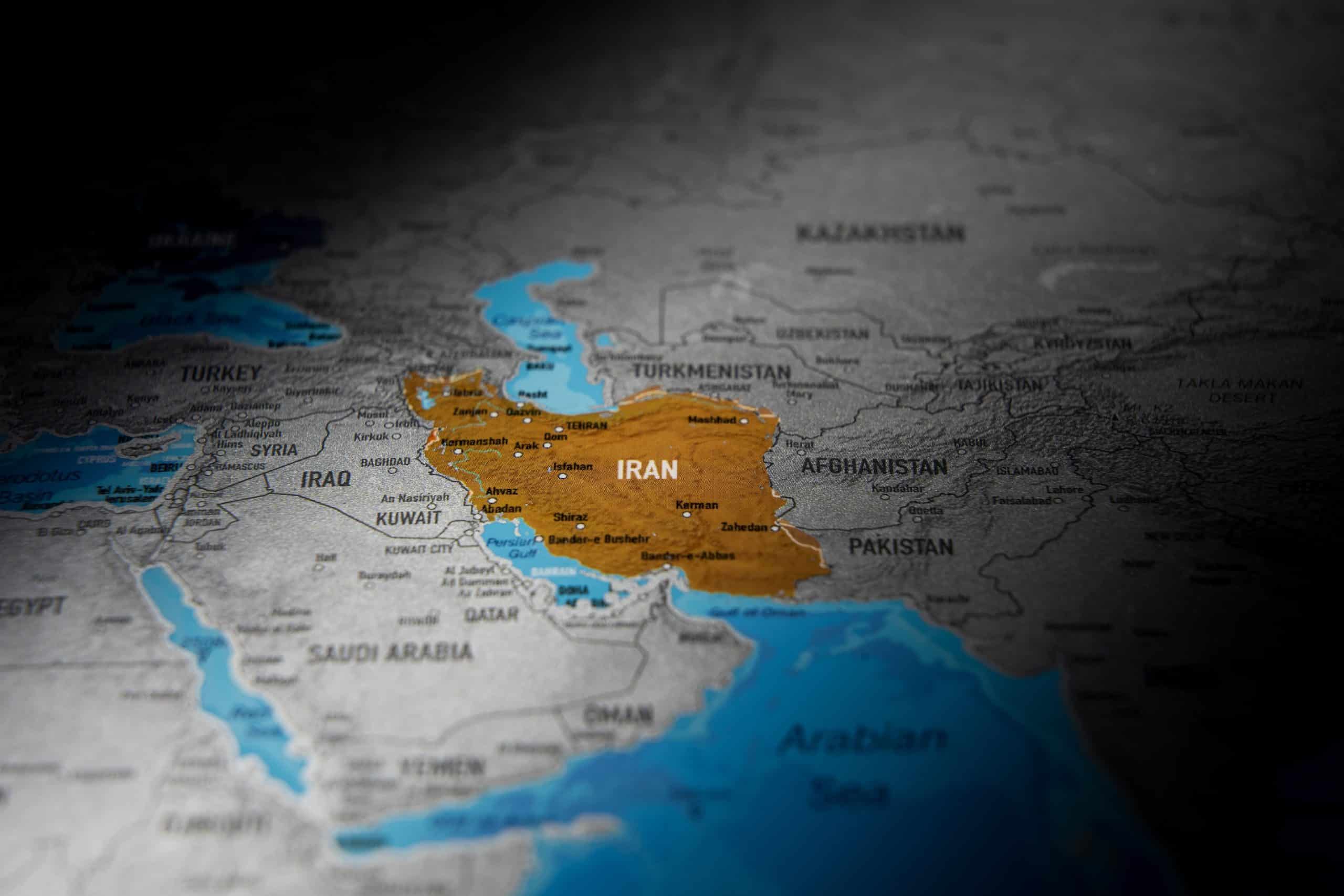
Conflict with Iran carries unavoidable risk to the disruption of the global energy supply as the Strait of Hormuz remains the most critical oil transit corridor in the world. According to a senior adviser to the Atlantic Council’s Middle East programs, risks surrounding the Strait of Hormuz have long been understood. However, the current conflict has revealed just how deep those vulnerabilities run. This is not a new development. Iran has controlled the Strait of Hormuz since 1979. It is widely understood that any conflict in Iran, or in the Middle East more generally, could directly impact the transport of oil through the Strait.
In 2025, roughly 20 million barrels per day were moved through the Strait, equating to roughly 25% of the world’s daily seaborn oil transit and significant volumes of fertilizers and liquefied natural gas under normal operating conditions.
Connecting the Persian Gulf with the Gulf of Oman and the Arabian Sea, military escalation anywhere in the region threatens a risk to the global energy supply. This only further complicates U.S.-military decision making. Options to bypass the Strait of Hormuz are limited and any impact on stability in the region can trigger an effect on global markets from price increases to supply chain disruptions. The current military escalation in Iran and the surrounding region has significantly disrupted shipping flows. Beginning in early March 2026, Iranian forces declared the Strait closed, with recent updates confirming that traffic through the Strait remains at a near standstill.
In this context, energy security becomes a prerequisite for strategic action. The ability to absorb or offset supply chain disruption is foundational to strategic planning. Without alternative sources of energy supply, escalation in the Gulf carries undesirable economic and political risks. However, with alternative sources of energy, the strategic calculus changes. This energy dependence raises a critical question: how do you confront a power like Iran without remaining vulnerable to the immediate supply chain disruption it creates?
Venezuela as the Tactical Move
If a key downside to confrontation with Iran is energy vulnerability, then the removal of Nicolas Maduro may have helped ease this burden. Venezuela possesses the largest proven oil reserves in the world, but for years those resources remained constrained by sanctions, economic chaos, political instability, and state control. Maduro’s 2026 capture and subsequent U.S. involvement in Venezuela significantly reshaped this landscape.
Immediately following Maduro’s capture, U.S. policy in region shifted toward rapid reintegration of Venezuela’s oil sector into global markets, with oil exports surpassing 1 million barrels per day for the first time since September 2025. Sanctions were eased, major international firms were authorized to resume operations, and new investment opportunities were introduced to restore production capacity.
Venezuela’s long constrained oil sector has been repositioned as a more accessible and increasingly influential supply channel, one that exists entirely outside of the immediate geopolitical risks associated with the Persian Gulf. Even though Venezuelan production cannot replace the volume that typically flows through the Strait of Hormuz, it serves to reduce dependence on a vital, Iranian controlled chokepoint and expands the United States’ strategic flexibility.
This shift also carries significant implications for power competition. For years, China has maintained its position as the main buyer of Venezuelan oil. Expanded U.S. influence over Venezuela’s market begins to disrupt this dynamic. By regulating access, shaping contracts, and influencing export flows, China’s access to previously discounted oil has become constrained. This limits China’s ability to secure energy supply from the Western hemisphere, further strengthening the United States’ position.
The timing of this change is critical. With global markets already sensitive to disruption, unlocking even an incremental supply of oil from Venezuela alters the risk of impacting the movement of oil through the Strait of Hormuz. This is important in the short-term because Venezuela offers an alternative source that can increasingly be scaled and influenced by the U.S. in ways Gulf production cannot. Venezuela did not replace the Middle East but may reduce some of the economic consequences associated with confronting the Iranian regime.
The Monroe Doctrine
The logic behind prioritizing Venezuela is not new but reflects a longstanding principle of U.S. strategy in the Western Hemisphere: the Monroe Doctrine. First articulated in 1823, the doctrine sought to prevent external powers, primarily Europe, from establishing political or military control in the Americans, positioning the Western Hemisphere within the U.S. sphere of influence.
While originally limited to European control, Trump has since revived the Monroe Doctrine and pushed the “Trump Corollary” in an effort to reassert U.S. dominance in the hemisphere, limit the influence of other world powers like China and Russia, and secure strategic assets, including energy sources. The two primary objectives laid out in the Trump Corollary are to enlist regional partners in support of U.S. security priorities, particularly narcoterrorism and irregular immigration, while simultaneously expanding military presence and economic leverage. These goals reflect a clear shift from the passive deterrence associated with the Monroe Doctrine to more active control.
Sequencing: From Venezuela to Iran
With energy capacity expanded and influence in the Western Hemisphere strengthened, the United States better positioned itself to confront Iran. This sequence of events warrants closer examination. The removal of Nicolas Maduro and the rapid reintegration of Venezuelan oil into global markets preceded U.S. conflict in Iran and the killing of Iran’s Supreme Leader Ayatollah Ali Khamenei.[1] To many, these actions appear disconnected, one a regional intervention to counter narcoterrorism and one an attack on a radical regime accused of conducting human rights violations for nearly 50 years and killing more Americans in the last 47 years than any other terrorist regime on earth. However, while these events occurred more than 7,000 miles apart, it is worth considering them as part of a broader strategic progression for the United States.
By securing access to an alternative energy supply in Venezuela, the United States reduced its exposure to the direct consequences of confronting Iran. The Strait of Hormuz has long functioned as both a logistical chokepoint and broader strategic complication, limiting the ability of external powers to escalate without incurring significant economic risks on a global scale. While Venezuela does not eliminate the risk, it does change the magnitude and introduces a sense of flexibility into a system previously defined by dependence.
Gaining more direct access to Venezuela did not eliminate the risks associated with confronting Iran nor did it remove the strategic importance of the Strait of Hormuz. However, it expanded U.S. energy capacity and shifted the balance of energy dependence. By bringing one of the largest oil reserves back under its influence and redirecting supply flows away from competitors such as China, the United States increased its ability to influence global markets.
Global Implications
The implications of this strategic shift extend far beyond Venezuela or Iran—they point to a broader transformation in how energy, geography, and power are being changed in the U.S., something that closely aligns with the priorities outlined in the 2025 U.S. National Security Strategy.
First, Venezuela’s reintegration into global oil markets contributes to a restructuring of supply chains that were previously defined by dependence on the Middle East. While Gulf producers remain essential, especially Saudi Arabia, the expansion of Western Hemisphere supply under U.S. influence introduces a more flexibility into global markets. The NSS explicitly emphasizes the importance of securing resilient supply chains and reducing vulnerabilities associated with geographic concentration, particularly in regions prone to instability.
Second, influence and control of Venezuelan oil have the protentional to alter the dynamics of great power competition. China has long benefited from access to heavily discounted Venezuelan crude, often secured through obscure financial arrangements to bypass sanctions. U.S. influence over Venezuelan oil flows may begin to limit that advantage. It shifts leverage toward the United States as both a consumer and a gatekeeper of supply. The NSS highlights the centrality of economic statecraft in competition with our adversaries, especially the need to constrain their access to critical resources. Thus, energy has become a domain of competition as much as it has security.
Third, and perhaps most importantly, this shift redistributes global dependence. During periods of instability, disruptions in the Strait of Hormuz can lead to countries seeking reliable alternative supplies not subject to the same risks as in the Gulf. By expanding its access to and influence over oil in the Western Hemisphere, the United States increases its role in supplying oil. This aligns with the NSS emphasis on strengthening alliances and reinforcing U.S. leadership in global markets. As partners face supply shocks, reliance on U.S.-aligned energy channels deepens both economic and political ties. This also carries clear economic benefits to the United States. Increased demand for U.S.-aligned energy exports strengthens domestic and U.S. controlled production, stabilizes supply chains, and enhances the United States’ position within global markets.
These developments suggest a shift toward a more dispersed energy system where control over key nodes of the system matters more than just production levels. Venezuela may reveal itself as a step towards a more dispersed system. The NSS identifies this transition implicitly, emphasizing resilience, competition, and strategic positioning over output metrics.
Risks and Conclusions
This strategic move is not without risk. Venezuela’s oil sector remains constrained by years of underinvestment, degraded infrastructure, deeply embedded corruption, and control by Venezuelan criminal syndicates. Increased access to oil revenues does not automatically translate into stability and may instead reinforce existing support networks, including those tied to state-linked illicit actors. Expanding production will take time, sustained investment, and political conditions that remain uncertain.
More broadly, controlling supply does not eliminate vulnerability. The Strait of Hormuz retains its ability to disrupt global markets, and no alternative source can fully offset a sustained shock. Global energy systems remain interconnected, and instability in one region continues to reverberate across others.
Yet the objective of U.S. strategy is not to eliminate risk but to manage and redistribute it. By securing access to Venezuelan oil, reorienting supply flows, and positioning itself as a central intermediary in global energy markets, the United States has shifted the balance of dependence. In moments of disruption, that shift matters. It determines who absorbs the shock, who adapts, and who gains leverage.
Trump’s moves suggest that Venezuela was a strategic step within a broader effort to reshape the conditions under which global power is exercised. The sequence reflects what appears to be a deliberate logic: secure influence, expand capacity, and enter confrontation from a position of strength. Energy has always shaped geopolitics. What is changing is how it is used and who controls access to it when it matters most.
[1] While Khamenei was killed in an Israeli-led operation, President Trump has often spoken in support of his removal.
*image credit: AA.