The Horn of Africa (HOA) and Red Sea region, situated along one of the world’s most critical maritime routes and chokepoints, holds an outsized geopolitical significance, as the Iran War has demonstrated the precarity of trade-route security and the importance of stable littoral states in keeping routes open. Long before the current war, however, many recognized the Horn as a vital region and turned their attention accordingly. Turkey, as a player with significant economic and security interests in both the Mediterranean and the Middle East, and with historical ties to the Horn, recognized this early and began moving into the region. Initially, Turkey’s engagement with the Horn states was driven by a desire to enhance its presence in Africa while securing economic and investment deals. While still motivating factors in its regional policies, Ankara’s approach to the Horn and Red Sea is now increasingly shaped by Middle Eastern security considerations. Turkey’s main rivals and partners in the Middle East, including Egypt, Saudi Arabia, the UAE, and Israel all have significant presence in the HOA. This has led to a surge in engagement and a more militarized strategy to compete for influence while also driving limited cooperation with Arab states.
Turkey’s initial approach toward the Horn focused primarily on developing close bilateral ties with local states in the region. Starting with Somalia in 2011 and expanding into other states such as Ethiopia, Eritrea, Sudan, and Djibouti, Ankara provided humanitarian aid, economic investment, and cultural diplomacy, cultivating relationships and markets. Ethiopia would grow into one of Ankara’s largest investment partners. This outreach was based on Turkey’s view of itself as a center country, located at the intersection of various geopolitical fault lines and security regions. Turkey thus sees its interests lying in a multipronged foreign policy, engaging in many different regions simultaneously. The Horn, as the gateway in the broader Indo-Mediterranean economic corridor, is a natural extension of Ankara’s interests in the Mediterranean and, increasingly, the Middle East. In the early to mid-2010s, however, economic incentives and global status were the primary motivating factors behind Turkey’s engagement in the HOA, as it was with the rest of Turkey’s engagement in Africa.
Over time, Turkey’s approach to the Horn evolved and expanded, taking a larger part of Ankara’s foreign policy. While engagement with Somalia and Ethiopia were successful policies that established foundations to build on, Turkey’s influence in other regions regressed. The rollback after the Arab Spring, including nasty civil wars in Syria and Libya, had a detrimental effect on Ankara’s ability to project power and influence abroad. At the same time, other Middle Eastern states were making their own moves in the Horn. Egypt, historically the Middle Eastern power with the largest role in the Horn, given its geographic proximity, increased its focus southward due to renewed tensions with Ethiopia over the Grand Ethiopian Renaissance Dam. Other states, namely Saudi Arabia, the UAE, Iran, and Israel, also began to prioritize the Red Sea and Horn in their security considerations.
Turkey’s position in the Horn no longer seemed like a sure thing. A new sense of vulnerability led Turkey to begin prioritizing security and defense in its Horn strategy. Stability in the region, which had always been a desired goal, became the guiding principle that drove Turkey’s engagement. Initially, the Horn’s political instability and chaos gave Ankara the opportunity to build influence by giving aid to troubled states. Now, with its position increased, it feared outbreaks of violence in dysfunctional states and the ripples that could cause in broader arenas. Stability, as it often does, took a militarized form. Increased integration between the Turkish military (and its manufacturers) and local states gave Ankara greater decision-making and power-projecting ability. Turkey’s increased drone and weapons shipments did the same, while also giving Ankara a valuable export market for its military industrial complex at the, at times at the expense of civilians.
Military presence and economic integration are not the only avenues of Turkey’s engagement in the Horn. It has leveraged these to act as a mediator in local conflicts. In 2024, Turkey stepped in to mediate a brewing disagreement between Somalia and Ethiopia, two of its biggest local partners, after the former announced a deal with Somaliland for port access. Ankara has also acted as a mediator between Somalia and Somaliland, as well as between Sudan and Eritrea. This mediating posture serves several key interests. It attempts to prevent violent conflict between states that Ankara sees as partners, thereby maintaining the stability that Turkey seeks in the region. Mediation also bolsters Turkey’s international stature as a peacemaker and ensures that its interests are served, as seen in the Ethiopia-Somalia deal which undermined Somaliland, and its UAE benefactor.
Along with Turkey and the UAE, the Horn has seen numerous foreign states dip their toes in, to the point where the Horn of Africa and Red Sea is no longer, if it ever truly was, an independent security region. The increased presence of these foreign states, most significantly from the Middle East, has been so prevalent and influential as to effectively subsume the HOA and Red Sea into the larger Middle Eastern security complex. The new Red Sea maritime alliance spearheaded by Saudi Arabia demonstrates this reality, with eight of the fourteen initial members being located in the Middle East. Rivalries between Middle Eastern states have been transplanted onto local Horn politics. The UAE has developed a significant relationship with the Ethiopian government in Addis Ababa through economic and military backing, while also supporting the RSF (Rapid Support Forces) in Sudan, a paramilitary force at war with the SAF (Sudanese Armed Forces), who have received funding from Turkey, Egypt, and KSA. Abu Dhabi has also repeatedly increased both its presence and its support for Somaliland, while Israel has followed in their footsteps and went even further by recognizing Somaliland’s independence in late 2025. This does not mean that these local actors are fully beholden to their foreign backers, as is demonstrated by Ethiopia’s simultaneous close relationship with Ankara despite Turkey’s contentions with Abu Dhabi, but rather that the possible options open to these local states are heavily related to who is funding them, and that must be considered when enacting policy. In this environment, Turkey has shifted its relations with local states into more militarized security-oriented partnerships. Through military cooperation and training, the opening of Turkish military outposts in the region, and large drone and weapon shipments to partner governments, Ankara has expanded its military posture.
Within this new Middle Easternized Horn, Turkey has found that its short-term interests in the region have aligned with those of Egypt and Saudi Arabia, due to the threat of insurgent and breakaway regional actors backed by common competitors, the UAE and Israel. Consequently, the three have begun to cooperate on certain issues following the rapid rapprochement among them in the early 2020s, a seemingly unlikely development given their previous hostility. Turkey, wounded by its failures in the 2010s and its growing economic precarity, has adopted a more pragmatic and cooperative approach to its Arab rivals.
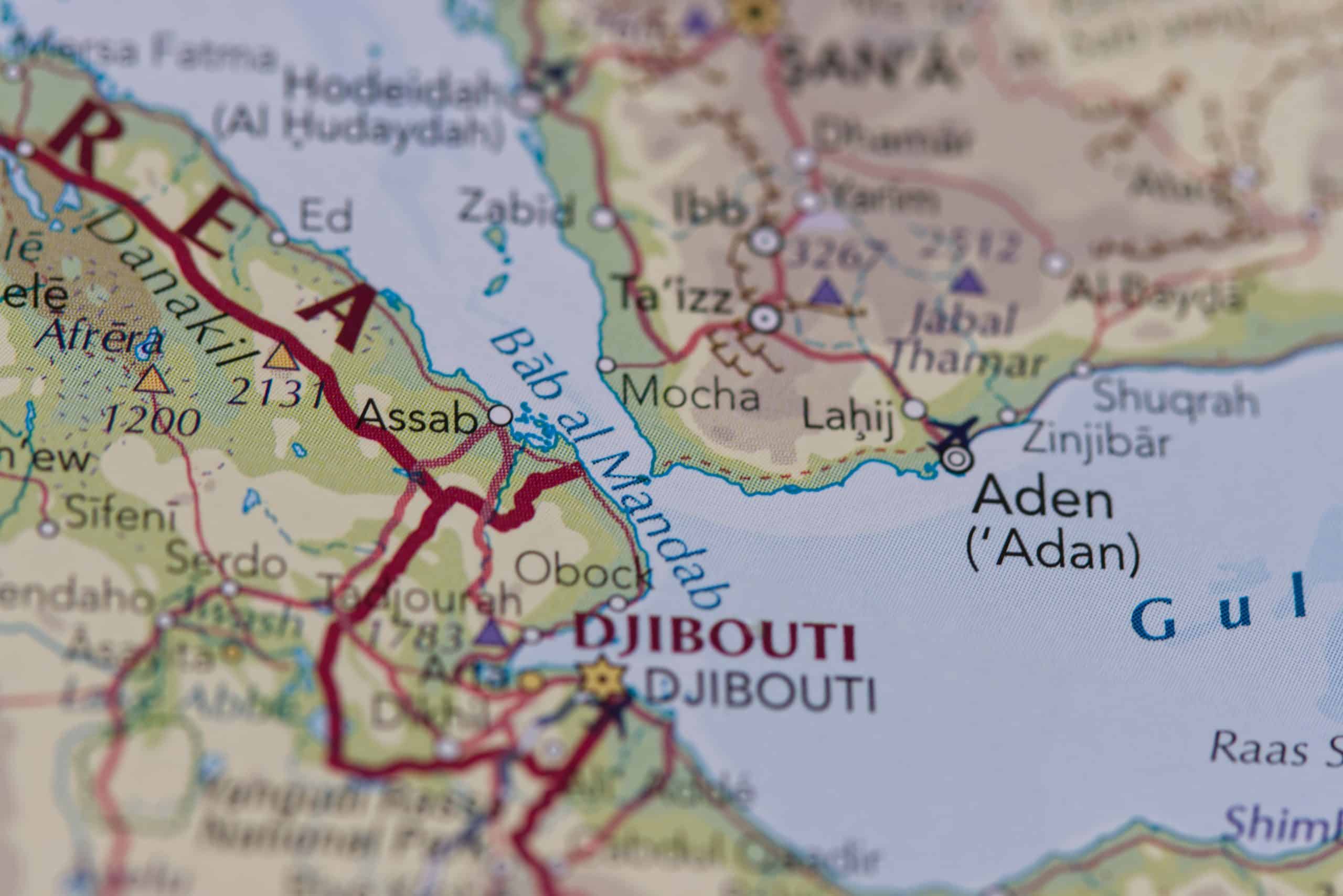
The contention between Egypt and Ethiopia, exacerbated by the Grand Ethiopian Renaissance Dam, drove Egypt to increase its military ties with Turkey and to improve its relationship with Somalia, Turkey’s main partner in the HOA, after initially being unnerved by Turkey’s presence there. Tensions with Ethiopia and the encroachment of other actors, such as the UAE, changed Egypt’s calculus, leading to mutually beneficial cooperation with Ankara. Saudi Arabia’s main priority in the region is keeping the Red Sea and the Bab al-Mandeb strait open for its oil and other commercial shipments. Primarily focused on the Houthis, Riyadh sees that supporting Turkey and Egypt will help stabilize the Horn while allowing it to focus its attention on Yemen. The Saudis also want to check the growing Israeli and Emirati presence in the region, given Israel’s recent aggressiveness and Abu Dhabi’s split with Saudi Arabia, a desire shared by Ankara. Egyptian and Saudi ties with the SAF also offered Ankara an opportunity to regain some of the standing it had lost in Sudan after the overthrow of ally al-Bashir in 2019. All three states have increased their military support for the SAF as the war has continued, with heightened cooperation shown by the deployment in Sudan of Turkish Baykar drones from an Egyptian military base, although it is unclear just how much coordination is going on.
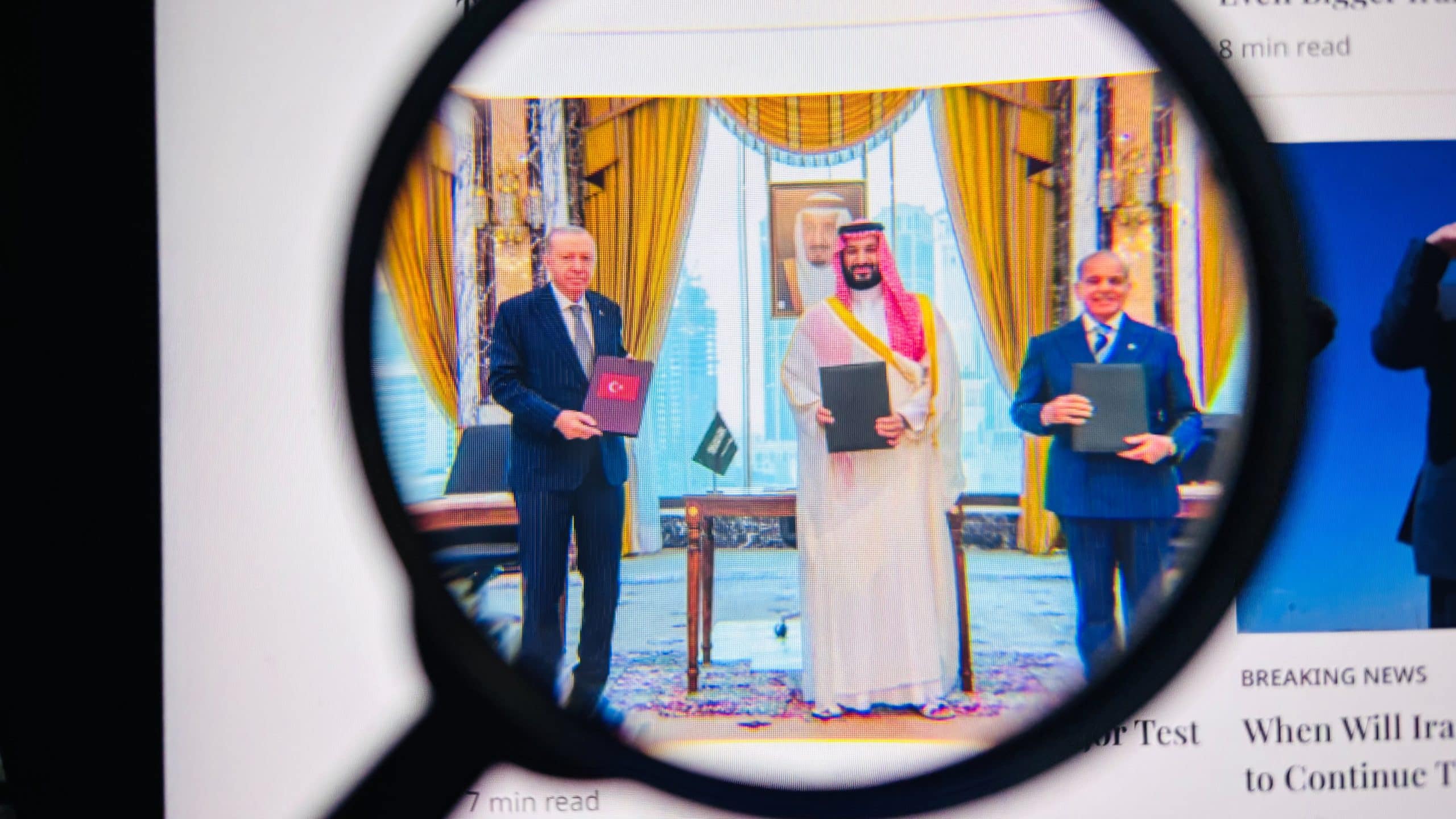
The Horn comes as only one part of their growing coordinated efforts, spanning diplomatic, military, and economic partnerships. The Egyptian and Turkish militaries have been conducting joint exercises signaling a close partnership and shared threat perceptions, while they have joined Saudi Arabia and Pakistan in a military cooperation agreement. This new cooperation was solidified in the Mecca Defense Agreement, a mutual defense pact recently signed by Saudi Arabia, Turkey, and Pakistan.
This cooperation, it must be noted, remains very limited and is based on short-term interests. The Mecca agreement is thin on practical matters and should be seen more as a public proclamation of increased cooperation among these states than as a signal of a new regional axis. Egypt’s non-inclusion in the original signing of the agreement also raises doubts. The areas of disagreement between Egypt, Turkey, and Saudi Arabia did not disappear with rapprochement. Other interests merely became more prominent. Turkey, while tempered by its loss of ground in the 2010s, still aspires to regional leadership in the Middle East, which necessitates a strong presence in the Horn. Egypt and Saudi Arabia hold the same aspiration: to be seen as the primary power in the Middle East and leader of the broader Islamic world. This will not change and will only foster division between the three as time goes on. Many of the current areas of cooperation among the three could become arenas of conflict. In Sudan, for example, all three seem to be on the same side, supporting the SAF. But each of them supports the SAF for the influence they get in return, and neither Egypt, Turkey, nor Saudi Arabia will want to let the other push them out of Sudan after the current war ends.
Cracks are already emerging. The lack of a single adversary to unite the three creates a divergence in threat perception. Saudi concern over the Houthis is not matched by Turkey, which has been consciously neutral towards the Yemeni group despite publicly condemning them. Similarly, Turkey’s relations with the UAE are not as vitriolic as Riyadh’s have recently become. Despite significant underlying rivalries, Turkey still relies on Emirati investment in its economy and is unwilling to insult Abu Dhabi publicly. Turkey’s mediation between Somalia and Ethiopia, as discussed above, effectively sidelined Cairo while helping Addis Ababa in its quest for port access. Egypt also relies on its ties with Somalia to counter Ethiopia, and Turkey’s role as Somalia’s main partner gives Ankara immense leverage over its Arab partner. Old grievances left unaddressed could reemerge, sowing cracks among the three, and new developments will shift power dynamics and alter the political calculus. There may be cooperation for now, but the increasing securitization of the region will likely only lead to further instability and violence. As the Horn becomes more and more embedded into the Middle Eastern security complex, the Middle Eastern powers responsible will find themselves more and more entrenched in their alliances and commitments to local players, which could eventually backfire on them.