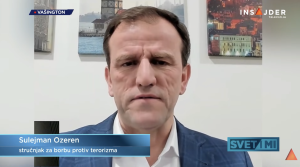
In this Expert Panel Series, three prominent subject-matter experts assess recent developments in Syria, including the ceasefire and integration agreement transferring control of Raqqa and Deir ez-Zor from the SDF to the Syrian government. We posed three questions to Colin Clarke, Caroline Rose, and Suleyman Ozeren to evaluate shifts in domestic power, the future of ISIS mobilization, and the implications for counter-terrorism, U.S. policy, and regional stability.
Question 1. How do these recent developments reshape the domestic balance of power, and what are the specific security implications for the Druze and Alawite communities?
Caroline Rose: The ceasefire and integration agreement between Damascus and the SDF is a redefining marker of a post-Assad Syria in 2026. By consolidating total control under the central government and curtailing the semi-autonomous status of the SDF in the northeast, Damascus has now put a ‘nail’ in the coffin of the concept of semi-autonomous rule in this new moment in Syria, particularly when pertaining to security forces. Damascus’s control over Raqqa, Deir ez-Zor, key oil and gas resources, and border crossings, along with the U.S.’ statement that the SDF has just been a counter-ISIS partner, can be considered as a key loss in both bargaining power and influence for the SDC and SDF. This consolidation diminishes the influence of Kurdish political and military structures that had operated independently for over a decade.
For minority communities such as the Druze and Alawites, the implications are multifaceted. Greater central authority could enhance security guarantees for Alawites–Assad’s former power base traditionally aligned with the state–reinforcing their protection from insurgent threats; however, it may also entrench their association with regime politics in broader societal tensions. For the Druze, integration is perceived as an existential threat, following separatist demands from their leader, Hikmat al-Hijri. Both communities may face pressures as the state reallocates military and policing resources to former SDF territories, potentially deprioritizing localized security needs or exacerbating intercommunal distrust if inclusive governance mechanisms are inadequately implemented.
Colin Clarke: The recent events in Syria, including the ceasefire and the integration agreement with the SDF, shift the balance of power more favorably toward al-Sharaa and his backers in Ankara. There are always concerns for minority groups in the country, as there are in any post-conflict setting, but given the growing relationship between Washington and Damascus, as well as Israel’s protection of the Druze, I would expect sectarian bloodshed to be sporadic and mostly contained, although that could ebb and flow.
Suleyman Ozeren: The political landscape in Syria has shifted considerably since the Trump administration’s decision to work closely with al-Sharaa and Hay’at Tahrir al-Sham (HTS), alongside U.S.-brokered negotiations aimed at achieving stability in Syria—an outcome that required significant concessions from the Kurds. One of the central challenges throughout this process has been the Syrian Democratic Forces’ (SDF) maximalist demands, which failed to reflect realities on the ground. Today, the balance of power in Syria has shifted at the same pace as HTS’s takeover of Damascus in December 2024—rapid and consequential.
The SDF, and the Kurds in particular, long viewed their role as indispensable; however, that perception was, at best, overstated. While the SDF maintained a long-standing alliance with the United States, Washington’s engagement was driven solely by the fight against ISIS. As the United States considered a full withdrawal from Syria, its primary concern was preventing the resurgence of ISIS. As a result, the domestic balance of power has shifted from expanded SDF influence to a stronger central authority under HTS. The SDF has now effectively diminished into a predominantly Kurdish force rather than a coalition of Arabs, Kurds, and other ethnic groups. This transformation marks the loss of one of the SDF’s most important sources of leverage and legitimacy vis-à-vis HTS. As Arab tribes shifted their allegiances and aligned with HTS, both the SDF’s military strength and political power eroded. There is now broad consensus among external actors in favor of a unified and stable Syria governed by a strong central authority, rather than having autonomous regions. This support is likely to continue; however, the government in Damascus will remain under pressure to recognize and protect the rights of the Kurds and other minority communities, including the Druze and Alawites.
Question 2. What do these shifts mean for the future of ISIS mobilization and counterterrorism dynamics in Syria and the broader region?
Suleyman Ozeren: While significantly diminished, ISIS has maintained a presence in Syria and Iraq, with estimates ranging from 1,500 to 3,000 fighters. The current situation in Syria may provide an opening for ISIS to mobilize its militants and expand its activities. As clashes between government forces and the Syrian Democratic Forces intensify, concerns have grown over the possibility of prison breaks involving detained ISIS fighters.
In the short term, ISIS activity and visibility in Syria and Iraq are likely to increase. However, if stability takes precedence and the central government strengthens its hold over the country, this heightened visibility is likely to give way to the group’s familiar insurgent tactics—hit-and-run operations, ambushes, and other low-intensity attacks.
Two critical questions remain. First, whether Damascus will be able to build a capable and reliable fighting force against ISIS, given persistent concerns about the composition of HTS’s military forces and their past—and in some cases ongoing—connections to Salafi-jihadist networks. Second, to what extent ISIS will seek to mobilize its militants beyond Syria and Iraq, particularly in neighboring countries, such as Turkey. As demonstrated in 2015, periods of instability and polarization provide ISIS with opportunities to exploit existing tensions. Should the clashes in Syria spill over into civil unrest in Turkey, ISIS may once again attempt to leverage these dynamics by targeting Kurdish communities.
Colin Clarke: Inevitably, there will be growing pains with integrating the Kurds into the Syrian armed forces. There are already hardcore Salafist-jihadists in the ranks of the Syrian military, holdovers from the HTS days, and these individuals could clash with Kurdish fighters. The more division there is within Syria, the better it is for the Islamic State, which will continue to target vulnerabilities, including the prison camps and detention centers, while seeking to rest, rearm, and recuperate.
Caroline Rose: The shift toward Syrian central government control reshapes counter-ISIS dynamics by transferring oversight of detention facilities, border security, and military operations from the SDF—a primary U.S. partner against ISIS—to Damascus. Under the agreement, the government assumes legal and security authority over prisons and camps that housed ISIS fighters and families. This transition heightens the risk of security gaps and breakout attempts during handovers, potentially enabling escapes or mobilization of residual ISIS networks if state capacity is overstretched or compromised by competing priorities. However, the U.S. has mitigated this risk with the introduction of a specialized mission to transfer detainees from Al Hol, Al Roj, and other facilities to Iraqi territory. This signals a temporary surge in U.S. involvement and oversight, as well as a formal acknowledgement of the SDF’s reduced role in regional security.
Still, with the SDF’s reduced operational autonomy and the Syrian government’s uneven control outside core urban centers, ISIS sleeper cells could exploit transitional vacuums. This may necessitate sustained, even increased, regional counterterrorism collaboration and intelligence exchange, particularly with the new Syrian Army.
Question 3. What are the implications of these developments for U.S. foreign policy priorities, including counterterrorism and regional stability?
Colin Clarke: Given all of the current foreign policy hotspots that the U.S. is attempting to manage—from Venezuela to Gaza to Ukraine—it remains unclear how much bandwidth Washington will devote to the Syrian portfolio. There are massive implications for counterterrorism, however, because without the enduring support of U.S. troops, there is a high likelihood that the Islamic State could resurge and once again, grow into a formidable force capable of planning external operations from the Levant.
Caroline Rose: For U.S. foreign policy, the SDF’s integration and the territorial consolidation under the Syrian government reinforce the U.S.’s longstanding goal of eventual withdrawal from the Counter-ISIS Mission. While this integration agreement was borne from weeks of clashes, displacement, and insecurity that did not align with U.S. goals of regional stability —stability that would enable its forces to withdraw— the end result can be considered as a step towards Syrian security unification and capacity-building that paves the way for an eventual American departure. The U.S. historically partnered with the SDF as an effective ground force against ISIS; the agreement and territorial handovers mark a departure from that model, signaling Washington’s pivot toward engaging with Damascus in counterterrorism. While supportive of the SDF and appreciative of their counterterrorism efforts, the U.S. saw factionalism as a key risk to Syria’s security landscape, favoring a model that consolidated forces, rather than models like Libya and Iraq that empowered semi-autonomous units and hurt overall capacity.
From a policy standpoint, the U.S. goal of preventing ISIS resurgence, stabilizing liberated areas, and promoting an inclusive political process will require new policy instruments in Syria, emphasizing diplomacy, targeted security assistance, and multilateral coordination. And while this can be considered a step towards eventual withdrawal, risks still exist: ISIS breakout attempts from detention centers, low Syrian Army capacity, as well as the risk of inter-sectarian violence within Syrian Army units. This actually may require the U.S. to temporarily surge both its attention and resources to address these immediate issues at hand, while maintaining eventual withdrawal as its end-goal.
Suleyman Ozeren: The Trump administration aims to complete a full withdrawal from Syria while simultaneously preventing a resurgence of ISIS in the region. U.S. Central Command has already launched an operation to transfer up to 7,000 ISIS detainees from northeast Syria to Iraq; according to CENTCOM, 150 detainees have already been transported from Hasakah to Iraq.
However, unless the underlying conditions that have enabled ISIS’s survival in Syria are addressed—and a more decisive political settlement is reached between Damascus and the Kurds—the risks of renewed instability will remain acute. The Kurdish question, unresolved by the al-Sharaa-led government, Kurds, and external actors, is likely to persist as the primary Achilles’ heel of any effort to achieve a stable Syria.
Orion Policy Institute (OPI) is an independent, non-profit, tax-exempt think tank focusing on a broad range of issues at the local, national, and global levels. OPI does not take institutional policy positions. Accordingly, all views, positions, and conclusions represented herein should be understood to be solely those of the author(s) and do not necessarily reflect the views of OPI.