Introduction
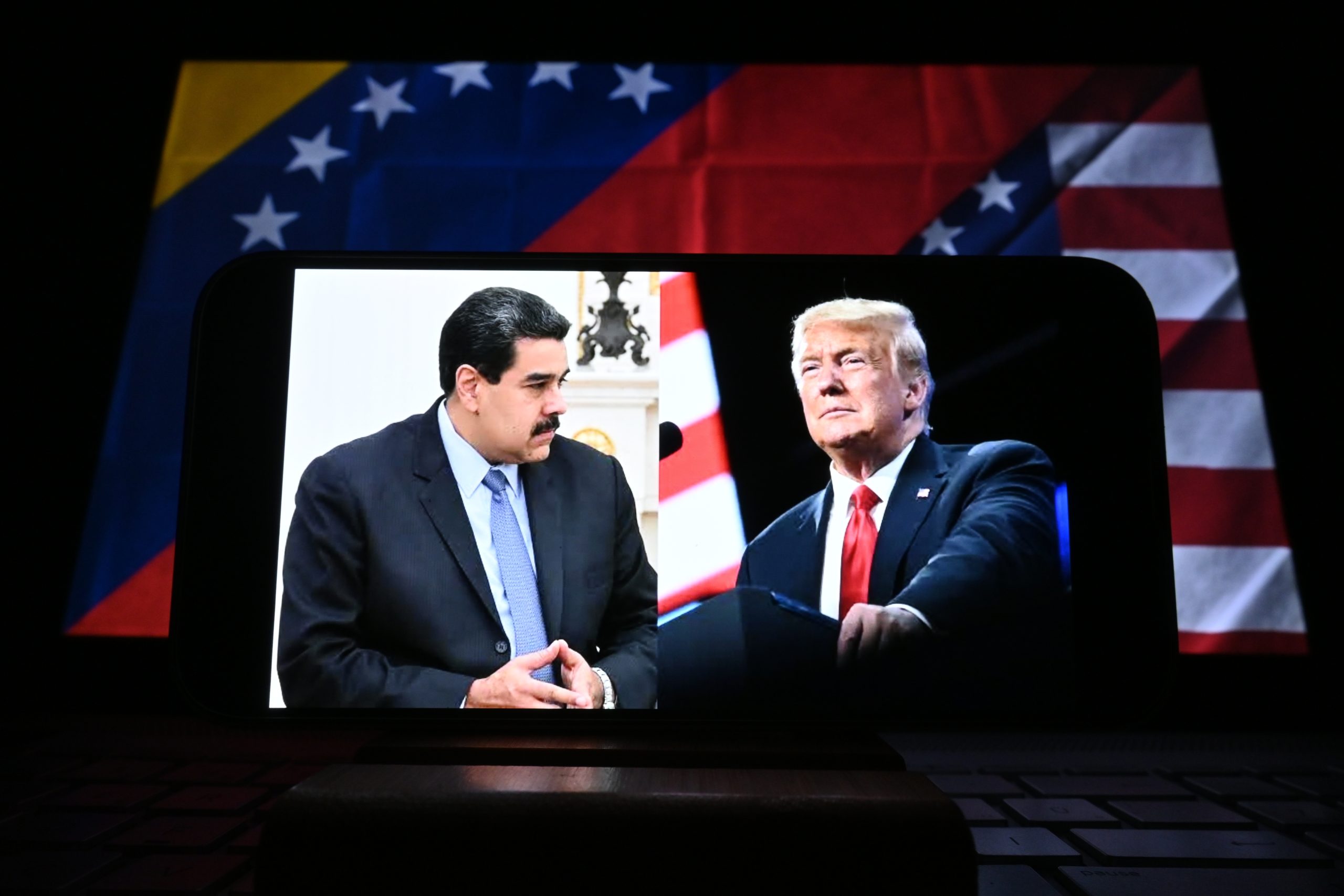
President Donald Trump recently accused Russia of conducting underground nuclear tests, while President Vladimir Putin, responding to U.S. discussions about providing Ukraine with Tomahawk missiles, warned that such a move would mark a “qualitatively new stage of escalation.”[1] These developments signal a renewed rise in U.S.-Russia tensions and highlight the increasing complexity of efforts to reach a sustainable resolution to the war in Ukraine. Contrary to campaign assurances by President Trump that peace could be instantly negotiated, the conflict appears more intractable than ever. President Putin’s symbolic visit to Alaska, intended to signal a thaw in relations with the West, failed to yield substantive progress, while the collapse of the planned Trump-Putin meeting in Budapest confirmed the absence of genuine Russian interest in ending hostilities.[2] Instead, Moscow has intensified sabotage, espionage, and disinformation activities targeting NATO member states, particularly along the Alliance’s eastern flank. Trump, in turn, has shown diminishing tolerance for Putin’s intransigence, hinting at the limits of Washington’s diplomatic flexibility. This deterioration in U.S.-Russia relations carries significant implications for NATO cohesion, particularly as the White House prepares to reduce its military presence in Romania, with potential subsequent drawdowns in Bulgaria, Slovakia, Hungary, and the Baltic States.[3] Although these adjustments do not amount to a full withdrawal, they unmistakably signal to the Kremlin a U.S. strategic pivot toward the Asia-Pacific, a move likely to embolden Moscow’s defiance and reinforce its reluctance to end the war in Ukraine.[4]
Frontline Developments and Evolving Political Dynamics
After three and a half years, the war in Ukraine has largely evolved into a war of attrition, with the heaviest fighting now centered around the city of Pokrovsk, a key transport and logistics hub that Russian forces have been attempting to seize for over a year, facing strong Ukrainian resistance. Russia continues to launch systematic missile, and drone strikes against Ukraine’s power grid and civilian infrastructure, causing thousands of casualties, around 3,200 civilians killed between 2024 and 2025 alone. In response, the government in Kyiv has carried out a series of carefully coordinated strikes on Russian military facilities and energy infrastructure, including oil ports, refineries, depots, and pipelines, aimed at disrupting fossil fuel exports and limiting Moscow’s financial gains from these revenues.[5] These retaliatory operations have been enabled by Ukraine’s growing drone industry and continued Western support, including intelligence sharing and advanced weapon systems such as British-made Storm Shadow missiles.
According to the Ukrainian military, since the start of the invasion Russia has launched approximately 9,600 missiles of various types and nearly 14,000 drone attacks against Ukrainian territory.[6] In July 2025 alone, around 89% of drones and about 61% of missiles were intercepted or neutralized, demonstrating a significant improvement in Ukraine’s air defense capabilities. However, a substantial number of projectiles still manage to penetrate defenses, causing severe destruction.[7] Despite heavy military losses, recent polls indicate that Ukrainian society remains resilient and continues to place strong trust in its Armed Forces, though signs of war fatigue are increasingly evident.[8] While Russia currently occupies roughly one-fifth of Ukraine, public opinion reflects a cautious and evolving attitude toward peace achieved through territorial concessions. Early in the war, strong confidence in victory and intense hostility toward Russia fueled opposition to any compromise. Over time, however, declining confidence and growing exhaustion have made some Ukrainians more receptive to limited concessions, particularly if backed by credible international security guarantees. Still, the majority firmly reject any formal territorial losses, and public sentiment remains a major constraint on policymakers considering a peace settlement.[9] This perspective aligns with the stance of EU leaders, who view any “land-for-peace” arrangement as both detrimental and likely to embolden President Putin’s further territorial ambitions. This divergence of perspectives shapes the leverage Washington can exert in urging Kyiv toward eventual negotiations.
Causes of Recent Tensions
During his presidential campaign, President Donald Trump pledged to swiftly end the war in Ukraine, criticizing his predecessor for lacking a long-term vision, or a coherent grand strategy toward Russia. Upon taking office, he immediately sought to restore direct, high-level communication channels between Washington and Moscow. A dialogue was initiated, and special envoy Steve Witkoff traveled to Russia, leading to a temporary de-escalation of tensions and creating a fragile foundation for discussions on a possible end to the war. President Trump believed he could pressure Ukraine into accepting a peace deal based on significant territorial or political concessions. However, when he met with President Volodymyr Zelensky in February 2025 at the Oval Office, their talks devolved into a heated exchange that later played out in public and was widely broadcast. The confrontation led to the abrupt cancellation of a planned joint press conference and the postponement of a potential agreement on critical minerals cooperation. Although relations between Washington and Kyiv later normalized to some degree, the episode exposed fundamental differences in their respective approaches to ending the war. Trump remained convinced that he could personally persuade President Putin to enter peace negotiations, a belief that culminated in the Alaska Summit on 15 August 2025. The in-person meeting between the two leaders, however, failed to break the diplomatic stalemate. Instead, it allowed Putin to project an image of renewed legitimacy on the international stage, ending his isolation from Western powers and signaling to China, India, and other countries, especially in the Global South that Russia remained a central actor in global power politics.
While the Alaska Summit clarified Moscow’s primary aims, it produced no roadmap for peace. Even after provocations such as a deliberate Russian drone incursion into Poland, prompting Warsaw to invoke Article 4 of the NATO Treaty, Trump continued to believe dialogue could yield results.[10] Despite maintaining communication channels between the White House and the Kremlin, plans for a follow-up meeting in Budapest in October 2025 collapsed abruptly. In its place, the White House imposed new sanctions on Russia’s two largest oil companies: Rosneft and Lukoil, marking a sharp turn in U.S. policy. Throughout the year, Trump’s stance on the war fluctuated significantly. His rhetoric alternated between calling for an immediate ceasefire and emphasizing Ukraine’s need to regain full territorial control. He applied growing pressure on Kyiv to make concessions yet became increasingly frustrated with Putin’s intransigence. Trump, who had repeatedly claimed that his personal rapport with the Russian leader would facilitate a rapid peace deal, found himself facing the limits of his own diplomacy as Moscow remained defiant and uncompromising.[11]
These developments underscored the diverging expectations surrounding the outcome of the peace talks. While Trump favors broad ‘grand bargains,’ Ukraine’s war defies such simplifications: it is not merely territorial, but existential, determining whether Ukraine remains sovereign or returns to Russia’s orbit. Historically, “big peace deals” have required at least some shared objectives between adversaries. In Ukraine’s case, however, the invading power has shown little genuine interest in any negotiated settlement. Although President Putin publicly welcomed a renewed U.S.-Russia dialogue, he never viewed it as a serious step toward ending the conflict. In Moscow, Trump’s overtures were largely interpreted as a sign of weakness – an opportunity to stall, regroup, and exploit divisions within the transatlantic alliance. Putin’s core demands have remained unchanged since the invasion: international recognition of Russia’s unilateral annexation of four Ukrainian oblasts in September 2022, regime change in Kyiv, restrictions on Ukraine’s armed forces, and a ban on NATO membership. This persistence demonstrates that his brief rapprochement with Washington was used instrumentally to buy time and prolong the war rather than to seek peace. It now appears that the U.S. administration has come to recognize that there will be no quick or simple peace deal. Moscow remains unwilling to moderate its maximalist goals and continues to believe it can achieve more on the battlefield than at the negotiating table. While Russian forces have made only marginal territorial gains and often face counterattacks that push them back, the Kremlin continues to think in long-term terms, adhering to a paradigm in which time and attrition may ultimately led to victory.
NATO Towards US-Russian Halted Détente
NATO member states have approached the recent attempts at rapprochement between the United States and Russia with considerable caution, mindful of Washington’s pivotal role within the Alliance, its essential contribution to Ukraine’s military support, and the continued presence of American forces in Europe, particularly along NATO’s eastern flank. In these frontline countries, skepticism prevailed regarding President Trump’s ability to quickly bring the war in Ukraine to an end. This skepticism stemmed both from long-standing historical experiences in dealing with Russia and from its ongoing sabotage, disinformation, and espionage activities, as well as repeated airspace violations that, rather than subsiding during U.S.-Russia dialogue, intensified. These incidents were seen as a clear signal from Moscow that it sought to exploit the situation to drive a wedge between NATO allies and the United States, aware that President Trump was planning to scale back the U.S. military presence in Europe and redirect attention toward Asia.
Faced with such a volatile and unpredictable U.S. foreign policy, NATO allies were forced to adapt quickly. Some states relied on cultivating personal relationships with the American president, such as Finland’s President Alexander Stubb, while simultaneously maintaining a united and coordinated front, using collective action as a means to influence decision-making in Washington, which proved to be to some extent effective. This approach was exemplified by the joint visit of European leaders, the NATO Secretary General, and the President of the European Commission to Washington, where they accompanied the President of Ukraine for talks at the White House.[12] In this context, European leaders adopted a pragmatic, transactional strategy, one that President Trump values highly, by purchasing U.S. weapons systems destined for Ukraine. This was partly a response to Washington’s reduction of non-refundable aid to Kyiv but also reflected the growing pressure from the U.S. administration for NATO allies to increase defense spending and assume greater responsibility for supporting Ukraine, particularly given that the war is being fought on European soil. In June 2025, NATO member states agreed to raise their defense expenditures to 5 percent of GDP by 2035, although this decision was not without dissent. Spain, for example, committed to raising its defense spending only to 2.1 percent of GDP. Poland, by contrast, stood out as a positive example, allocating 4.7 percent of its GDP to defense already in 2025. The overall increase in European defense spending, however, stemmed not only from U.S. pressure but also from Trump’s announcements of a potential reduction in the American military presence in Europe, a scenario that compels European states to invest more heavily in strengthening their own defense capabilities.
Facing a hostile Russia and signs of U.S. isolationism, the EU strengthened its defense posture through the Defence Readiness Roadmap 2030, endorsed by the European Council in October 2025. The roadmap outlines four flagship initiatives aimed at enhancing Europe’s collective security and resilience: the European Drone Defense Initiative, designed to advance unmanned defense technologies; the Eastern Flank Guard, focused on reinforcing deterrence and rapid-response mechanisms along NATO’s most vulnerable border; the European Air Shield, intended to strengthen integrated air and missile defense; and the European Space Shield, aimed at safeguarding satellites and other critical space-based assets. Together, these initiatives represent an important shift toward greater European self-reliance and long-term defense preparedness in response to an increasingly volatile security environment.[13]
Possible Scenarios
The United States currently maintains approx. 85,000 military personnel across Europe, including some 20,000 troops deployed after Russia’s full-scale invasion of Ukraine in 2022. Should President Trump decide to withdraw a significant portion of these forces, such a move would likely be perceived in Moscow as another “carrot” – an opportunity to stall, prolong, and sustain the conflict, as time continues to play to the Kremlin’s advantage. Given Vladimir Putin’s persistent reluctance to engage in genuine peace negotiations, his dismissal of conciliatory gestures from Washington, and the continuation of hybrid operations targeting NATO’s European members, it has become increasingly clear that the current U.S. approach has failed to yield results. The suspension of U.S.-Russia dialogue has undermined the credibility of Trump’s conciliatory strategy and highlighted the need for a fundamental recalibration of policy.
A review of historical U.S.-Russia relations suggests that only sustained and coordinated pressure on Moscow could compel the Kremlin to reconsider its current course. In this scenario, Washington should adopt a “stick strategy” strengthening Ukraine’s long-range strike capabilities through the delivery of Tomahawk missiles, intensifying sanctions on Russia’s energy sector, and tightening restrictions on the “shadow fleet” circumventing embargoes. Furthermore, the seizure of frozen Russian assets held in Western banks could apply additional financial strain on the regime. A united NATO front, coupled with continued military and intelligence support for Ukraine, could gradually soften Moscow’s position, perhaps prompting limited concessions on one of its maximalist demands and creating a narrow window for renewed negotiations. However, such a shift might equally serve as a smokescreen for prolonging the war, rather than a genuine step toward peace.
The second scenario, that of continued restraint and disengagement, presents far graver risks. If Washington fails to exert meaningful pressure while simultaneously reducing its military footprint in Europe, the United States will lose vital leverage to bring Putin to the negotiating table. In this case, Russia would likely interpret the U.S. withdrawal as a strategic opportunity: both to consolidate territorial gains and to continue its offensive operations in Ukraine with renewed confidence. This path would not only embolden the Kremlin but also undermine NATO’s credibility, leaving Europe alone to shoulder an increasingly share of the continent’s security burden.
Conclusion
The United States should maintain a robust forward-deployed deterrent posture in Eastern Europe to prevent Russian expansionism and reassure NATO allies of Washington’s enduring commitment to European security. A visible and sustained American military presence particularly in Poland, Romania, and the Baltic States remains the most credible means of deterring further Russian aggression. Any premature reduction in U.S. forces could create a vacuum, inviting greater Russian risk-taking and weakening the confidence of frontline allies whose security depends on credible and immediate defense guarantees.
At the same time, Europe must assume a larger share of the collective burden. EU member states should meet their commitment to raise defense spending toward 5 percent of GDP by 2035, expand military assistance to Ukraine, and invest in interoperable capabilities that reinforce NATO’s deterrence posture. European leaders must also sustain close political engagement with Washington, ensuring the United States remains fully anchored in the Alliance despite shifts in its foreign priorities.
If personal diplomacy with Moscow has failed, the transatlantic community must apply coordinated, multilayered pressure on the Kremlin enhancing Ukraine’s long-range strike and air-defense capabilities, tightening sanctions, and maintaining a united front. Finally, the future trajectory of the conflict and the stability of the Euro-Atlantic alliance will depend on whether the United States and Europe choose to resolve over retrenchment and preserve the unity that remains the cornerstone of deterrence against Russian aggression.
[1] https://www.reuters.com/business/media-telecom/kremlin-warns-west-over-dramatic-escalation-moment-ukraine-war-2025-10-12/
[2] https://www.ft.com/content/d6655fb1-31af-4da8-85f7-085a8fc00969
[3] https://defence24.com/geopolitics/usa-withdrawing-from-the-baltic-states-analysis
[4] https://www.euronews.com/my-europe/2025/11/03/us-troop-drawdown-in-romania-signals-wider-us-pivot-away-from-europe
[5] https://www.reuters.com/world/europe/ukrainian-drone-attack-damages-russias-tuapse-port-sparks-fire-russia-says-2025-11-01/
[6] https://frontliner.ua/en/official-data-how-many-missiles-russia-has-launched-at-ukraine/
[7] https://abcnews.go.com/International/russia-launches-6400-drones-missiles-ukraine-record-breaking/story?id=124201916
[8] https://www.wfd.org/news/wfds-latest-poll-ukraine-shows-democratic-resilience-amid-war-fatigue
[9] https://www.tandfonline.com/doi/full/10.1080/21599165.2025.2538481#d1e967
[10] https://www.reuters.com/business/aerospace-defense/trumps-public-shrug-over-drone-incursion-poland-fuels-unease-europe-2025-09-13/
[11] https://www.euronews.com/2025/10/22/trump-doesnt-want-wasted-time-with-putin-as-plan-for-budapest-meeting-is-called-off
[12] https://www.nytimes.com/2025/08/18/us/european-allies-zelensky-white-house.html
[13] https://www.pism.pl/publikacje/nowa-agenda-obronna-ue-w-kierunku-wspolnego-rynku-sektora-zbrojeniowego
Orion Policy Institute (OPI) is an independent, non-profit, tax-exempt think tank focusing on a broad range of issues at the local, national, and global levels. OPI does not take institutional policy positions. Accordingly, all views, positions, and conclusions represented herein should be understood to be solely those of the author(s) and do not necessarily reflect the views of OPI.